



Introduction
In October 2026, Brazil goes to the polls to elect a president and state governors while fully renewing the 513-seat Chamber of Deputies and contesting two-thirds (54) of the Federal Senate. Public security has featured in Brazilian elections for decades—and dominated discourse since at least 2018—but this cycle presents an unprecedented shift: polling consistently shows it running ahead of the economy as voters’ top concern, driven by organized crime’s direct entry into electoral politics, physical candidate-targeted violence, and generative AI disinformation. None of these forces exist in isolation; fear of crime fuels hard-line security politics, yet those policies fail to prevent criminal factions from infiltrating the state—a dynamic that, combined with physical violence and weaponized disinformation, directly threatens the election’s integrity. As the first installment in a two-part series tracing this chain, this article covers the “Bukelization” of Brazilian security politics and organized crime’s penetration of electoral politics, while Part 2 examines physical violence, AI disinformation, and political extremism.
This Content Is Only For Subscribers
To unlock this content, subscribe to INTERLIRA Reports.
Part 1: Security Populism and Criminal Penetration of the Vote
The Fear-Data Gap
Public opinion research since 2018 has consistently placed security at or near the top of voter concerns, ahead of the economy – historically the Brazilians’ main concern – in most polls. What makes this cycle different is that the public sense of insecurity is escalating even where hard crime metrics show improvements.
Phone theft, online scams, and everyday visibility of violence shape daily anxiety far more than macro homicide statistics. That gap between perception and data is exactly the terrain where “tough on crime” messaging thrives, because a raid, a mass arrest, or a body count produces an immediate symbolic payoff that slower, evidence-based reform cannot match.
A Stalled Reform Agenda
It would be easy to assume the crisis stems from a lack of resources. It doesn’t. Public spending on security across all levels of government reached roughly R$153 billion in 2024 alone —a 6.1% real-term increase from 2023 and an jump of over 50% compared to a decade ago, with continued growth projected. Institutional coordination and political will are the real bottleneck, visible in the fate of PEC 18/2025[1], the constitutional amendment meant to restructure federal-state security cooperation and formalize the long-delayed national public security system (SUSP), created by law in 2018 but still lacking full state buy-in.
The PEC 18/2025 report has sat ready for a floor vote for months, stalled by a lack of agreement between party leaders and the federal government precisely because it’s an election year, with real risk that if it does move, it gets stripped down to the most crowd-pleasing elements — more police, more prisons, more repression — while harder coordination questions go unresolved. The same debate has revived talk of federal intervention in states seen as losing control of security, a politically explosive tool governors are eager to avoid.
A Government on the Back Foot
The federal government’s own instability on the issue became impossible to ignore in January 2026, when Justice and Public Security Minister Ricardo Lewandowski resigned, citing personal and family reasons. Behind that language, reporting pointed to renewed internal discussion about splitting the ministry back into separate Justice and Public Security portfolios, a structure last used under President Temer.
Whatever the precise motivation, losing Lula’s top security official less than a year before the vote underscored how exposed the federal government is on the very issue its opponents have made central to the race.
The El Salvador Playbook
That opposition has rallied around a specific international reference point: El Salvador. Since President Nayib Bukele’s mass-incarceration model became a global media phenomenon, Brazilian politicians have made pilgrimages to see it firsthand — at least fourteen officials since 2023, spending at least R$407,000 in public funds, some posing for photos inside the country’s mega-prison, CECOT, a facility criticized internationally for its conditions. The symbolism matters more than the study missions themselves: it signals that a growing bloc of Brazilian politicians sees mass incarceration and suspended due-process protections as an aspirational model, not a last resort.
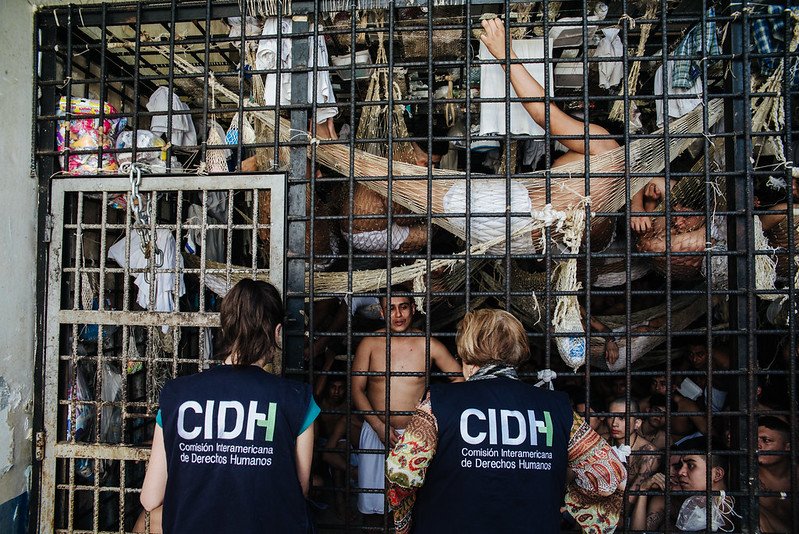
Brazil is not alone in this regional drift — Chile’s December 2025 election saw hard-liner José Antonio Kast defeat a governing-coalition rival who had herself adopted tougher rhetoric by the campaign’s end. Rio de Janeiro offers a domestic preview: Governor Cláudio Castro’s administration presided over one of the deadliest single police operations in the country’s history, and rather than damaging him politically, it was followed by a rise in his approval ratings — a signal other politicians appear to be reading.
Territorialization of the Vote
Organized crime groups no longer just benefit from weak governance — in a growing number of municipalities, they directly shape who is allowed to hold office. Researchers studying organized crime across Latin America describe this as “territorialization of the vote”: where a faction or militia controls a neighborhood, it can control, through intimidation or coercion who residents can vote for, converting criminal territorial control into electoral capital.
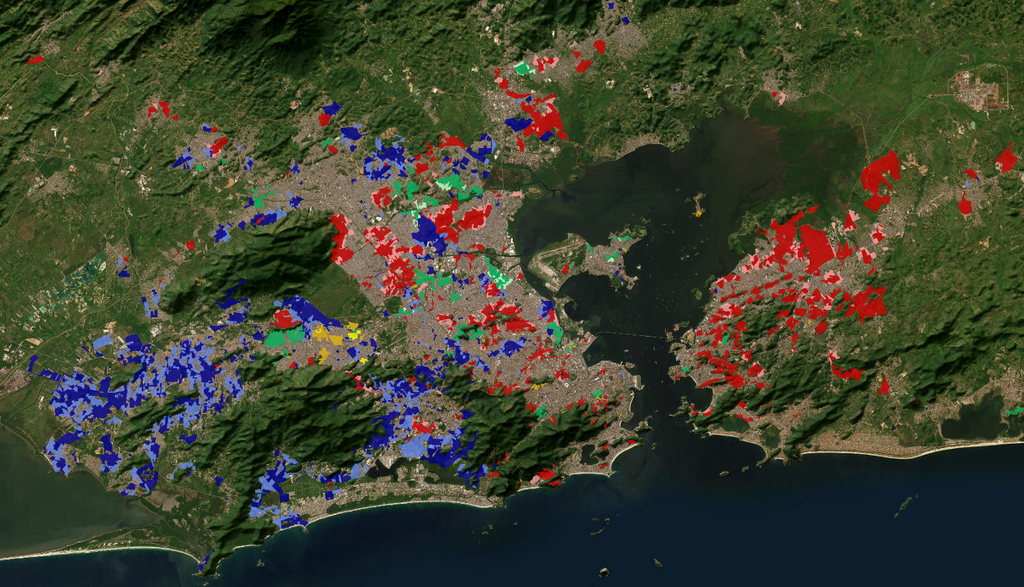
This is not a uniquely Brazilian phenomenon — comparative studies of illegal power across the region describe similar patterns from Mexican cartels to Central American gangs — but Brazil’s 2026 cycle has produced some of the clearest documented cases yet, spanning rural municipalities and urban peripheries alike.
In Santa Quitéria, Ceará, a mayor and vice-mayor were removed from office in 2025 after investigators established their campaign had relied on the Comando Vermelho’s local structure to intimidate voters. It wasn’t isolated: in Minas Gerais’s 2024 municipal elections, eighteen candidates were flagged as suspected of ties to the Primeiro Comando da Capital (PCC) or the Comando Vermelho (CV), though none were ultimately elected.
In Rio de Janeiro’s Belford Roxo, Eduardo Araújo’s (PL) candidacy was blocked outright over documented militia ties. In the capital, state deputy Val Ceasa (PRD) was barred from running for reelection due to suspected ties to a local gang, the Pure Third Command (TCP). In Rio state, at least 15 candidates had their candidacy questioned by electoral authorities due to suspected connections with organized crime.
Institutions Play Catch-Up
Heading into 2026, Brazil’s Electoral Public Prosecutor’s Office (MPE) moved to force the issue onto political parties themselves, recommending they establish internal ethics committees and screen pre-candidates’ backgrounds and finances, under threat of legal consequences for “willful negligence.” The response has been late and uneven. Parties only began building out these screening mechanisms starting in June, under direct pressure from prosecutors.
Before that recommendation, only the MDB had a standing internal rule specifically designed to keep faction members out of its ranks. Several party officials, speaking anonymously, have questioned whether the exercise is even effective, arguing parties lack police or prosecutors’ investigative tools and are being asked to do a job that isn’t theirs.
Legal Innovation vs. Political Weaponization: The “Criminal Links” Debate
Rio de Janeiro has produced one of the more novel legal strategies: its Regional Electoral Prosecutor’s Office has begun using family relationships to challenge candidacies, arguing that relatives of people already implicated in organized crime — dubbed political “heirs” — inherit and make use of the same criminal infrastructure their family members built.

Two cases illustrate the approach: first, João Drumond (PRD), grandson of a well-known illegal-lottery operator – Luizinho Drummond; second, the case of Rio’s city councilor Junior da Lucinha (PSD), son of State Deputy Lucinha (PSD), who is under investigation for alleged ties to the militia. The strategy is untested at higher courts, and its fate on appeal could shape how far prosecutors push similar cases elsewhere.
There is also a less obvious side effect worth flagging: accusations of criminal ties have themselves become a disinformation weapon between rival campaigns, independent of whether any real evidence exists. During São Paulo’s 2024 mayoral race, more than eighty WhatsApp and Telegram groups spread messages tying various candidates to the PCC. Supporters of Pablo Marçal and Marina Helena pushed the narrative that Guilherme Boulos was secretly aligned with the faction; supporters of eventual winner Ricardo Nunes, along with left-leaning activists, pushed back by accusing Marçal himself of being the faction’s real conduit into city politics.
Yet despite zero credible evidence linking either front-runner to the syndicate, the allegations served their purpose. The episode is a useful precedent for 2026: a real, well-documented problem — criminal infiltration of politics — can also become raw material for baseless attacks, making it harder for voters to separate substantiated allegations from smear tactics.
Conclusion & Preview: Looking Ahead to Part 2
Together, these dual threads reveal a security debate that will outgrow the traditional boundaries of law enforcement. The central question facing Brazil will no longer simply be how the state confronts crime, but whether criminal syndicates will succeed in embedding their own representatives within state institutions—and how far political leaders will stretch legal and democratic norms in response. This institutional erosion will not stop at policy debates; it will reach directly into the ballot box. Part 2 of this series will trace this trajectory to its next stage. It will investigate the physical violence targeting political figures—punctuated by the recent killing of federal deputy candidate Wallace do Sacramento in Rio de Janeiro’s Baixada Fluminense—and it will analyze the upcoming wave of AI-generated disinformation testing Brazil’s Superior Electoral Court (TSE), from deepfake avatars of disqualified figures to unresolved battles over tech regulation. Finally, it will examine a foiled far-right plot aimed at public institutions in Brasília during the election calendar, concluding with an assessment of what all four converging forces, taken together, will mean for the resilience of Brazilian democracy in 2026.
[1] Submitted by the federal government on April 23, 2025, PEC 18/2025 (PEC da Segurança Pública) restructures Brazil’s security framework by giving constitutional status to the Unified Public Security System (SUSP), expanding Federal Police jurisdiction over factional crimes, converting the Federal Highway Police into a multi-modal force, formalizing local municipal guards, and locking in permanent security funding. PEC 18/2025 has passed the Chamber of Deputies and cleared the Senate Constitution and Justice Committee, but its final vote by the full Senate remains pending until after the October 2026 elections.

