


Online scams are becoming increasingly sophisticated, combining information obtained from legitimate advertisements with criminal networks to deceive victims and generate financial gain. Cybercriminals are constantly developing new methods to exploit information publicly available on the internet, including vehicle advertisements, photographs, registration details, and other identifying characteristics. A recent investigation by the Civil Police in Rio de Janeiro highlights how criminals can use legitimate online vehicle listings as a blueprint to clone stolen vehicles and subsequently sell them through digital platforms. The case demonstrates the importance of caution when purchasing vehicles online and verifying both the seller and the vehicle independently before completing a transaction.
This Content Is Only For Subscribers
To unlock this content, subscribe to INTERLIRA Reports.
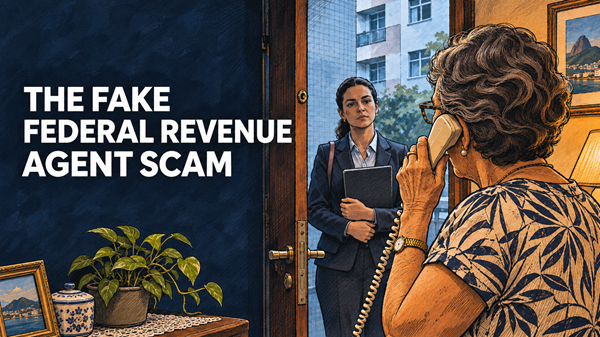
THE FAKE FEDERAL REVENUE AGENT SCAM
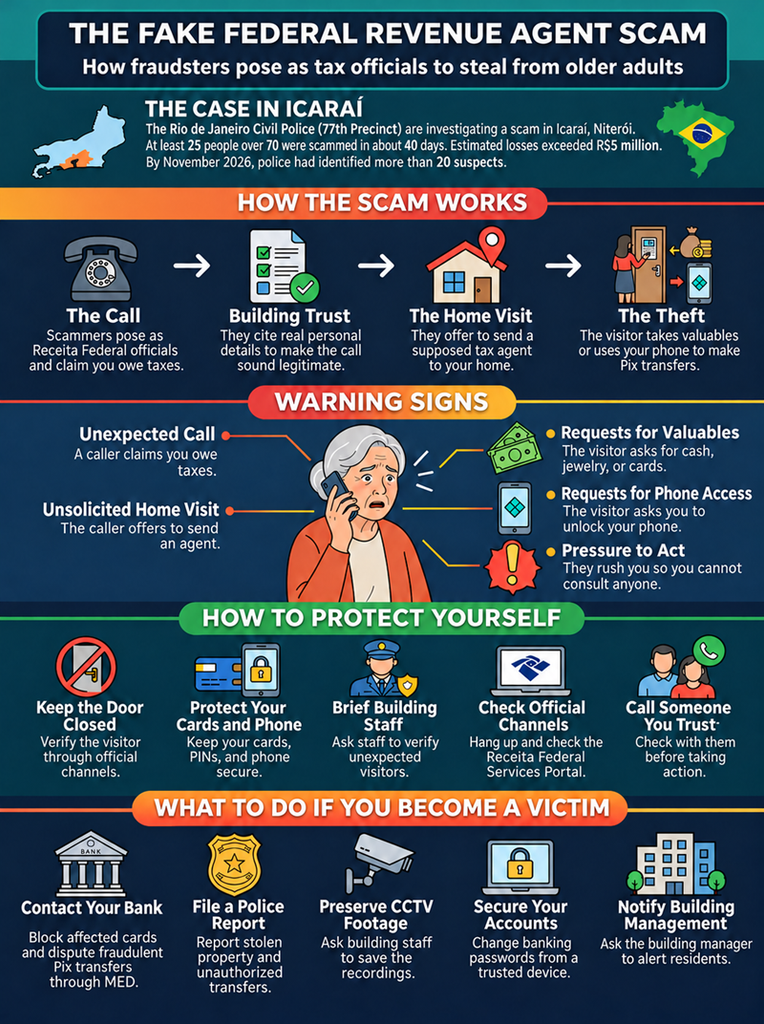
The “fake Federal Revenue agent” scam is a type of fraud in which criminals contact victims by telephone and subsequently visit their residences to steal cash, jewelry, foreign currency, and bank cards. In November 2026, the Rio de Janeiro Civil Police, through the 77th DP (Icaraí), advanced investigations into an organized crime group originating from Rio’s South Zone suspected of running the scheme in Niterói. Investigators identified more than 20 suspects involved in the network and petitioned the courts for arrest warrants as well as search and seizure warrants. Over an approximate 40-day period, the gang targeted at least 25 victims over the age of 70 in the Icaraí neighborhood, generating losses exceeding R$ 5 million. One of the identified members already had a prior arrest record and an active warrant for electronic fraud targeting the elderly.
How the Scam Works
Criminals initiate contact by calling the victim’s landline telephone and posing as officials from the Brazilian Federal Revenue Service (Receita Federal). To establish credibility and dispel suspicion, they demonstrate access to accurate personal data, including the victim’s full name, CPF (taxpayer ID), date of birth, and details regarding close relatives. They then claim there is a pending discrepancy on the victim’s Income Tax return, typically involving amounts under R$ 5,000. The scammers state that the file has been routed to a distant branch, such as Bangu, in Rio’s West Zone, creating a logistical hurdle for an elderly resident to travel there in person. Immediately afterward, they offer a fabricated solution: they claim a field agent happens to be in the area and can visit the victim’s residence to resolve the matter on site. The gang operates with a strict division of labor, utilizing female operatives to conduct the in-person visits and roughly 18 accomplices responsible for receiving and laundering the stolen funds. Upon arriving at the residential building, the suspect provides the resident’s name at the front desk and gains entry clearance after the elderly resident personally confirms the appointment via the intercom. Once inside the apartment, the operative convinces the victim to present valuable assets, collects bank cards, and even manipulates the resident’s mobile phone to execute instant Pix transfers, rapidly dispersing the money across mule accounts.
Warning Signs
• An alleged government official contacts you unexpectedly by phone, claiming urgent Income Tax discrepancies or unpaid tax debts.
• The caller uses accurate personal data, such as your full name, CPF, date of birth, and relatives’ names, to establish trust and appear legitimate.
• The impostor claims that resolving the issue at a physical branch would be difficult and offers to send a representative directly to your home.
• During the visit, the individual asks to inspect or collect physical valuables, including cash, jewelry, foreign currency, or bank cards.
• The supposed agent requests access to your unlocked mobile phone under the pretext of running verifications or administrative procedures.
• The visit is conducted hastily and with high pressure to prevent you from consulting family members before handing over valuables.
How to Protect Yourself
• Distrust any offers of in-home government visits, as the Federal Revenue Service never sends agents to taxpayers’ residences to collect debts or retrieve documents, bank cards, or valuables.
• Instruct elderly relatives never to authorize unverified visitors at the front desk via the intercom without first speaking to a trusted family member.
• Coordinate with gatekeepers and building managers (síndicos) to enforce strict identification checks and alert relatives or police when unknown individuals arrive claiming appointments with elderly residents.
• Never hand over bank cards, PINs, passwords, or unlocked mobile devices to third parties inside or outside your home.
• Hang up on unsolicited collection calls and verify your tax standing exclusively through official channels, such as the e-CAC portal or a trusted accountant.
• Educate elderly family members about how this social engineering tactic operates and establish a rule that any unsolicited contact involving money or home visits must be reported to the family immediately.
What to Do If You Become a Victim
• Contact your bank immediately to report the fraud, block cards, halt unauthorized transactions, and trigger the Pix Special Return Mechanism (Mecanismo Especial de Devolução – MED).
• Notify the Civil Police and visit the nearest precinct to file a formal Police Report detailing all stolen valuables, cards, and transferred funds.
• Preserve evidence for investigators by requesting CCTV footage from building management showing the suspects’ entry and movement on the premises, while retaining call logs and bank receipts.
• Immediately change passwords and login credentials across all financial apps and digital accounts if the criminals had physical access to your mobile phone.
• Alert building management and neighbors by informing the síndico so front desk personnel heighten vigilance and prevent other residents from being targeted by the same group.
Sources: O Globo.

