


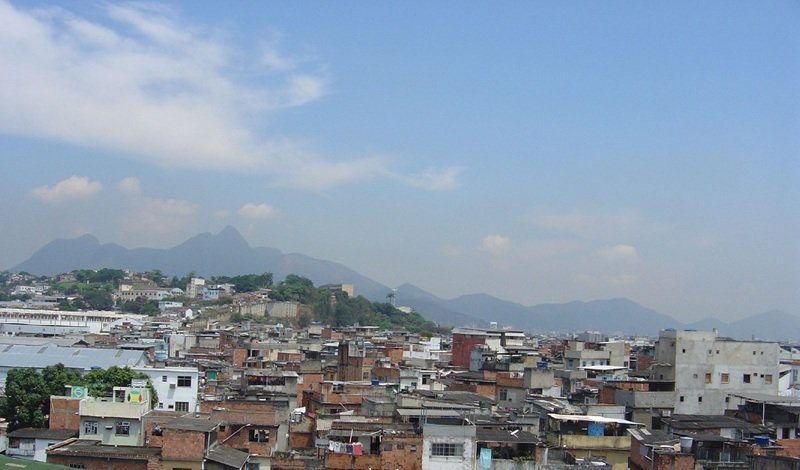
On Monday, September 28, a major Military Police operation in the Maré Complex resulted in 3 deaths and 13 injuries, while the criminal response affected schools, healthcare services, and the Linha Vermelha highway. Two school buses carrying about 120 students were intercepted and used as barricades in an attack that police linked to the Pure Third Command (Terceiro Comando Puro – TCP). The Civil Police identify Complexo da Maré as one of the main operational hubs of the TCP in Rio de Janeiro, used to shelter criminals from other states, establish alliances, move arms and drugs, redistribute stolen cargo, and support territorial expansion.
This Content Is Only For Subscribers
To unlock this content, subscribe to INTERLIRA Reports.
Maré as a Strategic Hub for Organized Crime
Police investigations describe Maré as a major logistics and coordination center for the TCP, combining territorial control with interstate criminal coordination. Investigations indicate that communities controlled by the faction hosted criminals from Bahia and Ceará and facilitated alliances with groups such as the Bonde do Maluco (BDM) and the Guardiões do Estado (GDE), in part to curb the expansion of the Red Command (Comando Vermelho – CV) in Northeastern Brazil. Police also reported the presence of members of the First Capital Command (Primeiro Comando da Capital – PCC) and meetings involving criminals from different organizations to negotiate illicit markets, weapons, drugs, and transit routes. Maré’s location, near Avenida Brasil, Linha Vermelha, and Linha Amarela, offers strategic access for moving criminals and redistributing stolen cargo. Territorial control has also increasingly affected residents’ daily lives. Reports describe new barricades, armed surveillance, transport restrictions, vehicle and cargo thefts, and home invasions.
Major Police Operation and Impact on Public Services
A major Military Police operation against the TCP on September 28 demonstrated both the scale of the security challenge and the significant collateral impact of armed clashes in densely populated areas. About 200 police officers operated in communities such as Vila do João, Morro do Timbau, and Baixa do Sapateiro. Three men were killed, and 13 other people were injured, including a 15-year-old youth, a police officer, and a 12-year-old child struck by grenade shrapnel. Seven suspects were arrested, while police seized 12 assault rifles, eight handguns, grenades, ammunition, and 83 kilograms of drugs, in addition to recovering six vehicles. The clash substantially disrupted civilian activities. Forty-one municipal schools and two state schools remained closed, while four primary healthcare units suspended services. Residents also reported intense gunfire during the celebrations of São Cosme and São Damião.
Criminal Retaliation Hits Linha Vermelha
Approximately 120 students from a school in Barra da Tijuca were traveling on a field trip when at least eight armed men on motorcycles stopped two buses, smashed their windshields, ordered the drivers to position the vehicles across the road, and took the keys. No students were injured, but the Linha Vermelha remained blocked for about an hour. According to the Military Police, the attack was a retaliation against the operation in Maré and may have been aimed at diverting security forces away from the complex. Preliminary police information reported by another article attributed the order to Álvaro Malaquias Santa Rosa, known as “Peixão,” a TCP leader associated with the Complexo de Israel.
Analysis
The security developments of the past week in Rio de Janeiro highlighted the growing operational capacity of the TCP, the consolidation of Complexo da Maré as a strategic criminal hub, and the ability of criminal groups to extend territorial disputes beyond the borders of the favelas and disrupt major transport corridors. Criminal territorial control extends beyond drug trafficking, directly impacting mobility, public services, and community life.
The security crisis expanded beyond Maré when armed criminals intercepted two school buses on the Linha Vermelha and used them as barricades, demonstrating the ability of criminal groups to swiftly disrupt one of Rio’s main transport corridors.
The episode illustrates how territorial disputes and police pressure within communities under criminal control can generate immediate ripple effects on strategic roadways and civilian mobility outside those territories. Companies operating in the city, especially those using Rio’s international airport – Tom Jobim/GIG –, must maintain an efficient alert system for emergencies. GIG’s location mandates the use of Linha Vermelha to reach it, thus exposing passengers constantly to the security conditions of Maré Complex.
Sources: Folha de SP; Extra; G1 [1], [2].

