


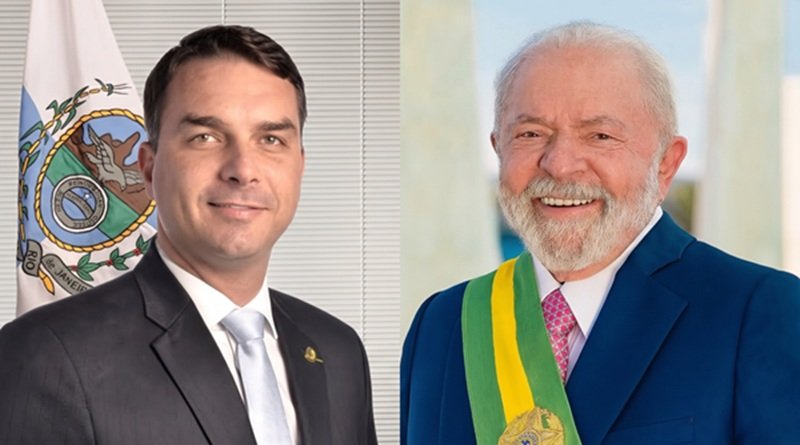
Brazil’s first-round elections on Sunday (04/10) produced a significant political shift to the right, sending President Luiz Inácio Lula da Silva (PT) and Senator Flávio Bolsonaro (PL) to a second-round runoff on October 25 while substantially strengthening conservative forces in Congress. Flávio finished ahead of Lula in the presidential race, while the PL simultaneously expanded its representation in the Chamber of Deputies and became by far the largest party in the Senate. The results increase pressure on the Supreme Federal Court (STF), reduce the prospects for government-backed labor measures such as ending the 6×1 work schedule, and mean that either presidential winner will govern alongside a substantially more conservative legislature. The elections also took place amid concerns over the political penetration of organized crime, with at least 30 candidates having faced challenges over suspected criminal links.
This Content Is Only For Subscribers
To unlock this content, subscribe to INTERLIRA Reports.
The Election’s Results
Flávio Bolsonaro finished the first round ahead of Lula, forcing the presidential election into a runoff and giving the Bolsonaro political camp significant momentum going into October 25. Lula acknowledged that the result was unexpected and said the second round would begin a new campaign focused on directly comparing the two candidates. The broader electoral results also favored the PL: the party elected five governors in the first round and could eventually control seven states, while the PT elected three governors. Flávio’s performance was particularly relevant because he managed to compensate for Lula’s continued advantage in much of the Northeast with stronger results elsewhere in the country. The outcome was described in the material as a major national defeat for the PT, despite Lula remaining competitive in the presidential race.
The Opposition Growth in Congress
The most consequential result beyond the presidential contest was the substantial expansion of the right in Congress, particularly the PL, which will have unprecedented influence over the next administration regardless of who wins the presidency. The PL increased its representation in the Chamber from 98 to 121 deputies, the largest single-party caucus elected since 1986, while the PT increased from 65 to 70. Combined with PCdoB, PV, PDT, PSOL, Rede and PSB, the left will hold only around 24% of the Chamber, or 124 seats—almost the same number as the PL alone. Centrão parties lost seats but will remain essential for forming legislative majorities. In the Senate, the shift was even stronger: the PL will hold 28 of the 81 seats, nearly three times the PT’s nine, giving conservatives significant leverage over congressional committees, constitutional amendments and appointments to the STF, Central Bank, regulatory agencies, CVM and diplomatic posts.
Risk of Impeachment
The conservative advance in the Senate has substantially increased the risk of impeachment proceedings against STF justices, although the new majority still falls short of the votes required to remove a magistrate. At least 49 senators in the legislature beginning in 2027 have expressed support, with varying degrees of commitment, for impeachment proceedings against Supreme Court members; 54 votes are required for removal. Newly elected figures supporting such measures include Michelle Bolsonaro, Bia Kicis, and other prominent conservative politicians. The Bolsonaro-aligned bloc is also considering measures that could have a stronger institutional effect than individual impeachments, including a constitutional amendment transferring criminal cases involving public officials away from the STF to other courts. Some Supreme Court members therefore see the possibility of impeachment proceedings as a concrete risk, although other justices expect the confrontational rhetoric to moderate once the new Senate takes office.
6×1 Should Remain
The electoral results have sharply reduced the prospects for approving the proposed end of Brazil’s 6×1 work schedule, under which employees may work six days followed by one day of rest. Government allies now consider a vote politically unviable following the right-wing advance in the Senate. Senate President Davi Alcolumbre had scheduled sessions to discuss the constitutional amendment ending the arrangement, partly creating an electoral issue that could force Flávio Bolsonaro to take a position during the runoff. However, Alcolumbre is expected to slow the proposal as he seeks support for his own reelection as Senate president and attempts to prevent the PL from installing one of Flávio’s allies in the leadership of the chamber. Consequently, the election transformed the 6×1 proposal from a potential second-round campaign issue into a measure with increasingly limited prospects of approval.
What Awaits the Next President
Regardless of whether Lula or Flávio Bolsonaro wins, the next administration will face severe structural constraints involving public finances, security, the judiciary, health, education, energy and foreign relations. Fiscal space is identified as the most transversal problem: public debt has reached 82.9% of GDP, while spending commitments and congressional amendments restrict the Executive’s ability to redirect resources. Public security will require confronting organized crime that now operates not only in drug trafficking and territorial control, but also in legal markets, finance, and digital activities, while Brazil continues to struggle with fragmented police forces, overcrowded prisons, and weak investigative capacity.
Other major pressures include maintaining SUS financing as the population ages, improving weak educational outcomes, managing an increasingly confrontational relationship with the STF, and reorganizing an energy system affected by rising consumer prices despite abundant renewable generation. Internationally, the next president will also have to manage difficult relations with U.S. President Donald Trump until at least 2029, pressure regarding Brazil’s relationship with China, competition over critical minerals and rare earths, regulation of major technology companies, and transnational drug trafficking. The combination of fiscal restrictions and a more assertive Congress means the next administration will also depend heavily on legislative negotiation to implement its agenda. The health sector alone already illustrates this dependence, as mandatory congressional amendments increasingly influence its financing and reduce the Executive’s discretionary capacity.
Candidates and Crime
The election also highlighted concerns about the growing intersection between electoral politics and organized crime, with at least 30 candidates nationwide challenged by prosecutors or electoral courts over suspected criminal links. Regional Electoral Courts initially rejected the registrations of 21 candidates, although one subsequently received authorization from the TSE, while ten other challenged candidacies were allowed because judges considered the evidence insufficient; two candidates withdrew following prosecutorial challenges. The cases involved alleged relationships with militias, the Red Command (CV), Pure Third Command (TCP), Nova Okaida, illegal gambling networks and schemes described by the Rio de Janeiro Electoral Court as “milícia de gravata,” involving criminal organizations operating through public institutions rather than armed territorial control.
Rio de Janeiro concentrated several of the most significant cases, demonstrating the particular vulnerability of electoral politics in territories influenced by armed groups. Among the challenged candidates were individuals accused of benefiting from faction-controlled territories, facilitating illegal services, interfering with security operations, participating in corruption schemes, or acting politically on behalf of criminal networks. Electoral courts increasingly relied on a TSE doctrine established in 2024 allowing candidates to be barred when sufficiently strong evidence indicates participation in an armed militia, even without a final criminal conviction. Rio’s Electoral Court went further by developing the concept of the “milícia de gravata” to address organizations accused of using political and administrative structures for criminal purposes.
Analysis:
The first-round results represent more than a change in the presidential balance of power. They indicate a structural movement toward a more conservative and confrontational Congress, particularly in the Senate, where the strengthened Bolsonaro-aligned bloc will have sufficient votes to influence constitutional reforms, senior government appointments and the institutional position of the STF. Even if Lula wins reelection, his administration would face significantly greater obstacles to passing ordinary legislation and maintaining its existing agenda. A Flávio Bolsonaro government, by contrast, would benefit from a more favorable Congress but could generate sharper institutional tensions with the judiciary.
From a security and political-risk perspective, the combination of congressional polarization, threats of institutional confrontation with the STF, the increasing political influence of organized crime and severe fiscal constraints creates a more complex operating environment for the next administration. The second round will therefore determine not only who controls the Executive, but how the already transformed balance of power between the presidency, Congress and the judiciary will develop from 2027 onward.
Sources: G1 [1], [2]; Folha de SP [1], [2], [3], [4], [5], [6], [7], [8], [9], [10], [11], [12], [13], [14].

