


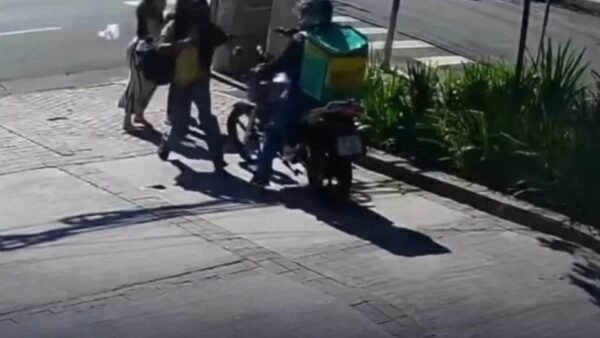
The number of victims of robbery followed by murder in São Paulo’s southern zone over a four-day period has equaled the total recorded across the entire city during the combined months of January and February, according to the most recent data released by the administration of Governor Tarcísio de Freitas (Republicanos). The figures point to a sharp and concentrated escalation of violent crime in a region that includes both high-income neighborhoods and major urban corridors, amplifying concerns among residents and authorities. This sudden spike not only breaks the pattern observed earlier in the year but also reinforces the perception of growing insecurity, particularly in areas previously considered relatively safer.
This Content Is Only For Subscribers
To unlock this content, subscribe to INTERLIRA Reports.
Recent Cases
A series of violent incidents in the southern zone illustrates the severity of the situation. On Sunday morning (19), a couple of lawyers were on their way to mass when they were approached by an armed robber on Avenida Juriti, in Moema. During the incident, 46-year-old Luciano Teixeira dos Santos, who was passing by, attempted to intervene after reportedly saying “not here,” according to witnesses. He advanced toward the assailant and was shot. On the same day, approximately three hours earlier and about 9 kilometers away, metropolitan civil guard Sara Andrade dos Reis, 34, was shot and killed by criminals riding a motorcycle at the access point from the Imigrantes Highway to the Matheus Torloni viaduct, in Água Funda. Three days earlier, on Thursday (16), app driver Alison Oliveira de Jesus, 42, was killed while attempting to stop a motorcycle robbery on Rua das Margaridas Amarelas, in Vila Calu, in the far southern zone. He struck the suspects with his car, but one of them got up and shot him in the head. In all three cases, the perpetrators managed to escape.
Police Response
The Executive Secretary of the Public Security Secretariat, Colonel Henguel Ricardo Pereira, stated that intelligence systems from both the Civil and Military Police were activated to respond quickly to the recent wave of crimes. According to him, authorities are using analytical tools such as heat maps to identify areas with a higher concentration of criminal activity. He also participated in a meeting with the Military Police command to coordinate an increase in patrols in neighborhoods with higher rates of theft and robbery, including crimes involving cell phone snatching and vehicle break-ins. One of the measures under consideration is expanding the number of officers on motorcycles, enabling faster mobility and more effective patrol coverage along major avenues and high-risk corridors.
Other Crimes in the Same Area
Additional incidents in the same region reinforce the sense of insecurity. The 96th Police Precinct (Brooklin), which covers the area where Luciano was killed, recorded two other significant cases within a short period. On Monday (20), a man was shot while attempting to recover his and his girlfriend’s cell phones after a robbery on Rua Gomes de Carvalho, in Vila Olímpia. André Gomes, 24, a receptionist at a nearby building, reported that criminals often operate at night and use delivery-style backpacks to blend in and avoid suspicion. These recurring patterns suggest a level of organization and adaptation among offenders, further complicating efforts to contain the rise in crime.
Analysis:
The recent emergence in robbery followed by murder in the southern zone of São Paulo represents a significant deviation from earlier crime patterns, particularly due to its concentration in a short period and in areas traditionally perceived as relatively secure. This type of crime, often associated with opportunistic theft that escalates into lethal violence, reflects a growing level of aggressiveness among offenders and a reduced threshold for the use of firearms. The fact that these incidents occurred in neighborhoods such as Moema and Vila Olímpia suggests that criminal activity is increasingly targeting high-mobility urban zones where potential victims are abundant and escape routes are readily available.

