


Online scams have become increasingly common, demanding greater attention to the links and online content we interact with daily. Cybercriminals are constantly creating new methods to deceive people for financial gain, ranging from falsified payment receipts to fake technician impersonations. In Brazil, around 71% of the population has already fallen victim to this type of crime, which shows the need for caution when clicking on links in WhatsApp messages, emails, or SMS, as well as avoiding sharing personal information with strangers. To reduce risks, it is essential to understand how these scams work, recognize their main types, learn what to do if you are targeted, and adopt preventive measures to protect your data and avoid financial losses.
This article is part of a series on digital security. You can read the other texts here.
This Content Is Only For Subscribers
To unlock this content, subscribe to INTERLIRA Reports.
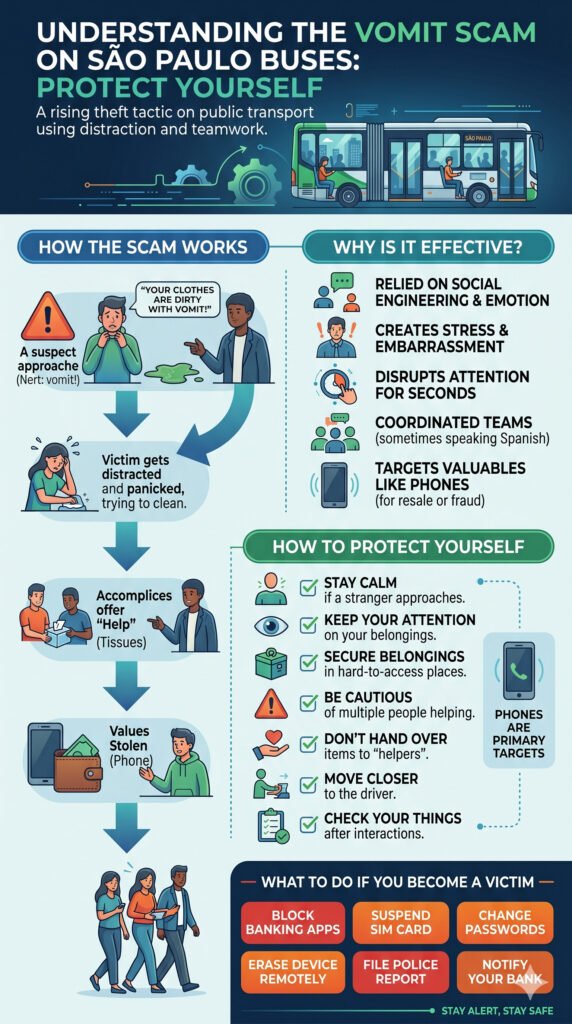
A new theft tactic reported on public buses in São Paulo has raised concern among passengers. Known informally as the “vomit scam,” the scheme relies on distraction, confusion, and teamwork to steal phones, wallets, and personal belongings from victims during bus rides. In the reported cases, criminals approach passengers claiming that their clothes or seat have been dirtied by vomit or another unpleasant substance. While the victim panics and tries to clean themselves, accomplices take advantage of the distraction to steal valuables — especially smartphones.
How the Scam Works
The scam usually follows a similar pattern:
- A suspect alerts the victim that their clothes are dirty with what appears to be vomit or another sticky substance.
- The victim becomes distracted, embarrassed, or anxious while trying to clean themselves.
- One or more accomplices approach, pretending to help by offering tissues, napkins, or assistance.
- During the confusion, thieves steal phones, wallets, bags, or documents.
- The group quickly leaves the bus at the next stop before the victim notices the theft.
- Victims reported that the substance often had little or no smell, suggesting it may have been intentionally prepared only to create panic and distraction.
Why the Scam Is Effective
Like many street crimes, the scam relies heavily on social engineering and emotional reaction. Criminals create a stressful and embarrassing situation to interrupt the victim’s attention for only a few seconds — enough time to steal valuables. In some reports, suspects spoke Spanish and appeared to work in coordinated groups. Even on buses that were not crowded, victims described feeling surrounded and pressured during the incident. Phones are the primary target because they can later be resold illegally or used in financial frauds, including banking app theft and Pix transfers.
How to Protect Yourself
Passengers can reduce the risk by following some basic precautions:
- Stay calm if a stranger suddenly claims your clothes are dirty.
- Avoid taking your attention away from your belongings.
- Keep phones, wallets, and documents in secure and difficult-to-access places.
- Be cautious if multiple strangers approach you at the same time.
- Do not hand your belongings to anyone offering “help.”
- If possible, move closer to the driver or other passengers you trust.
- After any suspicious interaction, immediately check whether your phone and valuables are still with you.
What to Do if You Become a Victim
If your phone or belongings are stolen:
- Block banking apps and digital wallets immediately.
- Contact your mobile carrier to suspend the SIM card.
- Change passwords linked to email, banking, and social media accounts.
- Track or remotely erase the device if location services are enabled.
- File a police report as soon as possible.
- Notify your bank if there is any risk of unauthorized financial transactions.
Authorities in São Paulo have warned that distraction thefts on buses and in crowded public areas remain common, especially in regions with heavy pedestrian movement and tourism. Staying alert during unexpected interactions is one of the most effective ways to avoid becoming a target.