


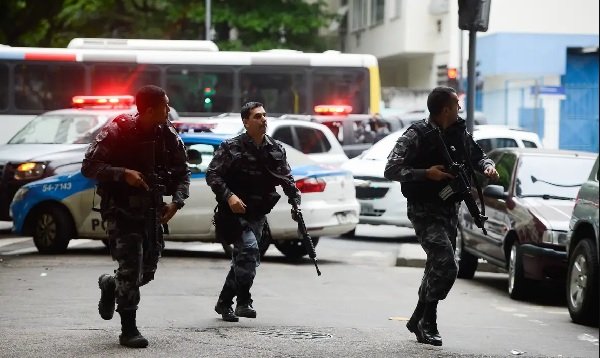
The Rio de Janeiro state government has defined the locations and timetable for the second phase of Operation Containment, following the large-scale police offensive carried out in the Alemão and Penha complexes, in the city’s North Zone. According to officials, the new phase is scheduled to begin at the end of January and will primarily target the communities of Muzema and Rio das Pedras, both located in the West Zone. In addition, the government plans to carry out two or three further phases of Operation Containment in areas dominated by organized crime by the end of February, a period that coincides with Governor Cláudio Castro’s (PL) expected resignation to run for the Senate. Among the locations under consideration for future phases is the Israel Complex, in the northern zone of the capital, currently controlled by the Third Pure Command and regarded by security forces as one of the most dangerous regions in the city.
This Content Is Only For Subscribers
To unlock this content, subscribe to INTERLIRA Reports.
Operation Containment
Launched in October, Operation Containment mobilized a significant contingent of state security forces and marked one of the most extensive coordinated actions in recent years. The operation brought together agents from both the Civil Police and the Military Police, in addition to elite and specialized units tasked with dismantling armed criminal organizations. The stated objective was to weaken the operational capacity of criminal factions, disrupt their territorial control, and restore state authority in areas considered critical for public security.
Red Command
During the first phase, police incursions were concentrated in territories dominated by the Red Command. The actions included the execution of arrest and search warrants, intelligence-led operations, the establishment of roadblocks, and the seizure of high-caliber firearms, ammunition, drugs, and vehicles allegedly used by organized crime. Authorities argued that these measures were aimed at neutralizing the faction’s ability to coordinate attacks and control local populations.
Final Balance
According to the official balance released by the state government, the offensive in the Alemão and Penha complexes became the deadliest police operation ever recorded in Rio de Janeiro. A total of 121 people died, including four police officers. Security officials stated that most of the identified victims had criminal records linked to serious offenses, while investigations remain ongoing to clarify the circumstances of each death.
Criticism
The scale and lethality of the operation sparked intense national and international repercussions. Human rights organizations criticized the use of force, questioned the proportionality of the actions, and called for greater transparency, accountability, and measures to protect civilians during police operations. On the other hand, public opinion surveys indicated significant support among Rio de Janeiro residents for the police action, reflecting widespread concern about the expansion of criminal factions and violence in the state.
Second Phase
For the second phase, the selection of Muzema and Rio das Pedras aligns with the government’s strategy of advancing into areas considered central to the logistical, financial, and territorial structure of the Third Pure Command. Authorities state that the operation will maintain the same model adopted in the first phase, emphasizing integration between security forces, intensive use of intelligence, and sustained police presence. The government argues that this approach is essential to preventing the reoccupation of these territories by criminal groups after the conclusion of large-scale operations.
Analysis:
The planned expansion of Operation Containment reflects a strategic choice by the Rio de Janeiro state government to sustain pressure on organized crime rather than treating major police offensives as isolated events. By moving from the North Zone to the West Zone, authorities signal an understanding that criminal factions operate through interconnected territorial, financial, and logistical networks. Targeting areas such as Muzema and Rio das Pedras suggests a focus on nodes that support governance, revenue generation, and mobility for criminal groups, which can have broader effects than purely reactive operations in areas already experiencing acute violence.
At the same time, the timing of the new phases raises questions about the intersection between public security policy and the electoral calendar. With further operations planned ahead of Governor Cláudio Castro’s expected resignation to pursue a Senate bid, the continuity and framing of these actions carry clear political weight.
Sources: A Folha de SP; Revista Oeste; O Globo.

