


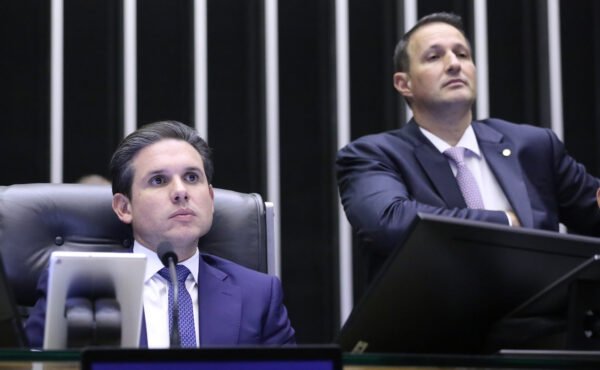
The rapporteur of the Anti-Faction Bill, federal deputy Guilherme Derrite (PP), will leave his post as São Paulo’s Secretary of Public Security and return permanently to the Chamber of Deputies starting Monday (01/12). Derrite’s departure was agreed upon with Governor Tarcísio de Freitas (Republicanos). Back in the Chamber, he plans to closely follow the progress of the Anti-Faction Bill, already approved by the House. Since the Senate is expected to introduce changes, the proposal will likely return to the Federal Chamber for a new vote later this year.
This Content Is Only For Subscribers
To unlock this content, subscribe to INTERLIRA Reports.
Substitute
Governor Tarcísio has not yet defined who will assume the Secretariat of Public Security following Derrite’s exit. Two names are under consideration: Osvaldo Nico Gonçalves, the executive secretary of Public Security, and Marcello Streifinger, currently the secretary of Penitentiary Administration. In an interview with GloboNews on November 20, Derrite had already anticipated that he would step down before the end of the year, with an eye on the 2026 political scenario.
Anticipation
Derrite states that his primary reason for returning to the Chamber is to take part in key public security debates, including discussions surrounding the Security Amendment proposed by the Lula (PT) administration. He is leaving his post four months earlier than required. Public officials planning to run in the October 2026 elections must step down by March. The secretary opted to negotiate an early transition with Tarcísio to resume his congressional activities sooner.
2026 Election
The deputy is positioning himself as a potential candidate for one of the two Senate seats São Paulo will elect next year. According to him, former president Jair Bolsonaro has already signaled approval for Derrite to represent the right-wing field in the state.
Anti-Faction Bill
Approved by the Chamber, the bill rapporteur’s text faced criticism from both the Lula (PT) administration and opposition members. Derrite produced six different versions before the final vote, which passed by 370 to 110. The proposal increases penalties, creates new criminal classifications, expands investigative tools, and defines stricter rules for leaders of criminal organizations. The bill now moves to the Senate, where Senator Alessandro Vieira will serve as rapporteur. Vieira has already indicated he intends to introduce modifications, which Derrite says he views without concern.
Analysis:
Deputy Guilherme Derrite’s return to the Chamber of Deputies marks a strategic repositioning ahead of both legislative battles and the 2026 electoral cycle. His departure from the São Paulo Public Security Secretariat comes at a moment when the Anti-Faction Bill—arguably his most prominent political project—moves into a critical phase in the Senate. By resuming his seat now, Derrite ensures he can directly influence the negotiations and defend the original framework he helped craft, especially as the federal government signals interest in altering key provisions.
The uncertainty surrounding his successor shows the weight of the Public Security Secretariat within Governor Tarcísio de Freitas’ administration. The choice between Osvaldo Nico Gonçalves and Marcello Streifinger carries substantive implications for continuity in policing strategy, coordination with the penitentiary system, and the broader political alignment within the state cabinet. Derrite’s early exit also reveals the tense intersection between security governance and electoral ambitions—particularly in a state where public safety consistently ranks as a top voter concern.
Sources: G1; UOL Notícias; O Globo.

