


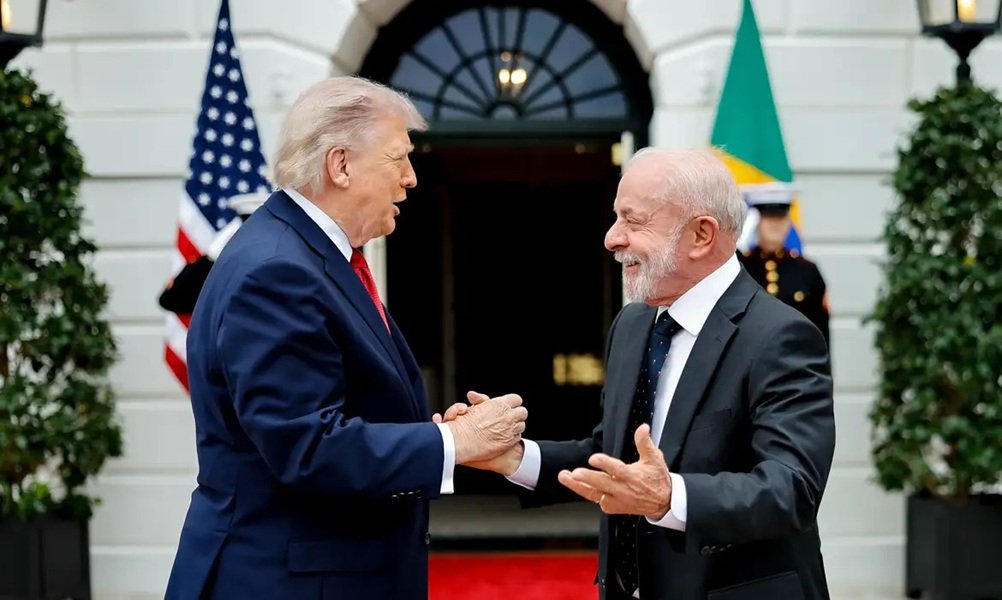
Brazil’s political agenda this week was marked by a combination of international diplomacy, institutional tensions, and growing concerns over public security. President Lula’s meeting with Donald Trump in Washington signaled an attempt to preserve dialogue with the United States amid disputes involving tariffs and broader bilateral interests, while, domestically, the federal government intensified efforts to contain political damage following the Senate’s rejection of Jorge Messias’s nomination to the Supreme Federal Court (STF). At the same time, debates surrounding the Dosimetry Law exposed new frictions within the STF itself, particularly regarding the handling of cases linked to the January 8 attacks. Public security also remained at the center of national attention after a Datafolha survey revealed that fear of violence has significantly altered the routine of most Brazilians, reinforcing pressure on the Lula administration to strengthen its security agenda. In response, the government is preparing to announce a nearly R$ 1 billion investment package focused on combating organized crime, arms trafficking, and improving coordination between federal and state security forces.
This Content Is Only For Subscribers
To unlock this content, subscribe to INTERLIRA Reports.
Meeting with Trump
President Lula (PT) met for approximately three hours with United States President Donald Trump during his first official visit to the White House under the Trump administration. The two leaders were initially expected to deliver a joint statement to the press from the Oval Office following the meeting, but the scheduled press conference was ultimately canceled. Lula is now expected to address journalists separately at the Brazilian embassy in Washington. After the meeting, Trump commented publicly on the encounter through social media, describing Lula as “dynamic” and characterizing the discussions as “very productive.” He also emphasized that tariffs were among the main topics discussed and stated that representatives from both countries are expected to hold further meetings to continue negotiations and address key issues on the bilateral agenda.
Damage Control
Following the Senate defeat that blocked the nomination of Jorge Messias to the Supreme Federal Court (STF), President Lula’s (PT) government launched a political damage control operation and began mobilizing intermediaries in an attempt to restore dialogue with Senate President Davi Alcolumbre (União Brasil). The effort has been led by Defense Minister José Múcio and Institutional Relations Minister José Guimarães, both tasked with easing tensions after what government officials privately describe as one of the most severe political defeats of Lula’s third term. The main objective is to pave the way for a meeting between Lula and Alcolumbre upon the president’s return to Brazil. The first step occurred on Tuesday (05/05), when Múcio met with Alcolumbre at the Senate president’s official residence. Government allies described the conversation as an initial gesture toward reducing tensions amid the political fallout from the failed nomination. The initiative continued on Wednesday (06/05), when Guimarães also met with Alcolumbre in another attempt to reestablish communication. Behind the scenes, government officials believe the crisis extends beyond the loss of a Supreme Court seat, exposing the fragility of the administration’s support base in the Senate and reinforcing Alcolumbre’s growing influence over the legislative agenda.
Dosimetry Law
Ministers of the Supreme Federal Court (STF) say they expect broad confirmation of the Dosimetry Law, despite recent decisions by Justice Alexandre de Moraes to suspend the application of the legislation in specific cases until the matter is analyzed by the court’s full bench. Some members of the court have also expressed discomfort with the approach adopted by Moraes in handling the issue. Since Saturday (09/11), the justice has issued a series of rulings involving individuals convicted in connection with the January 8 attacks, temporarily suspending the application of sentence reductions on a case-by-case basis. So far, more than ten decisions have followed this line. However, Moraes has not yet ruled on the broader constitutional challenges questioning the Dosimetry Law itself, meaning the legislation remains in force nationally. The suspensions issued by the justice are therefore expected to remain valid only until the issue is formally debated and decided by the STF plenary.
Public Security
Fear of violence has changed the daily routine of 57% of Brazilians over the past 12 months, according to the report “Fear of Crime and the 2026 Elections: The Triggers of Insecurity,” released on Sunday (10/11) by the Brazilian Forum on Public Security in partnership with Datafolha. The survey also revealed that the feeling of insecurity affects the overwhelming majority of the population, with 96.2% of respondents saying they fear at least one type of violent situation. Adapting routines has become one of the main social responses to rising insecurity. Among the most significant behavioral changes, 36.5% of Brazilians said they changed their usual routes, while 35.6% stopped going out at night. The cell phone, increasingly viewed as an essential asset that concentrates financial, professional, and personal information, has become a symbol of this insecurity crisis: 33.5% of respondents said they stopped carrying their phones out of fear of robbery. Other changes identified by the study include removing wedding rings or valuable accessories (26.8%), avoiding the purchase of goods for fear of theft or robbery (22.5%), and adopting other unspecified preventive measures (19.4%). According to the report, the country lives under a permanent logic of self-protection, although the social impact is felt more intensely among women and lower-income populations.
Transfer to Public Security
President Lula (PT) is expected to announce this week an investment package of nearly R$ 1 billion aimed at strengthening Public Security initiatives across the country. The announcement is scheduled for Tuesday (12/11) and will focus on the Brazil Against Organized Crime program. According to government officials involved in the discussions, most of the resources should be directed to the National Public Security Fund and the National Penitentiary Fund. The government also intends to emphasize measures designed to improve coordination between the federal government and the states in combating criminal factions. The program prioritizes actions against organized crime groups, arms trafficking, and the improvement of investigations into homicides and other serious crimes. The initiative comes amid growing pressure on the Lula administration to strengthen its security agenda, an area considered one of the government’s main vulnerabilities in public opinion polls and political debate.
Analysis:
Brazil is entering a period in which foreign policy, institutional disputes, and public security are becoming increasingly interconnected within the domestic political arena. Lula’s meeting with Donald Trump demonstrates an attempt to preserve strategic dialogue with the United States despite ideological differences and tensions surrounding tariffs and international conflicts. Beyond the diplomatic dimension, the meeting also carries domestic political significance. By maintaining direct engagement with Trump, Lula seeks to project an image of international relevance and pragmatic leadership at a time when foreign policy issues increasingly influence internal political polarization.At the institutional level, the rejection of Jorge Messias’s nomination to the Supreme Federal Court exposed the fragility of the government’s relationship with Congress and reinforced the growing influence of Senate leadership over the national political agenda. The subsequent effort to rebuild communication with Davi Alcolumbre reflects the government’s recognition that institutional stability now depends heavily on political negotiation within the Legislative Branch.
Source: G1 [1], [2], [3], [4], [5]; O Globo; Folha de S. Paulo [1], [2], [3].

