


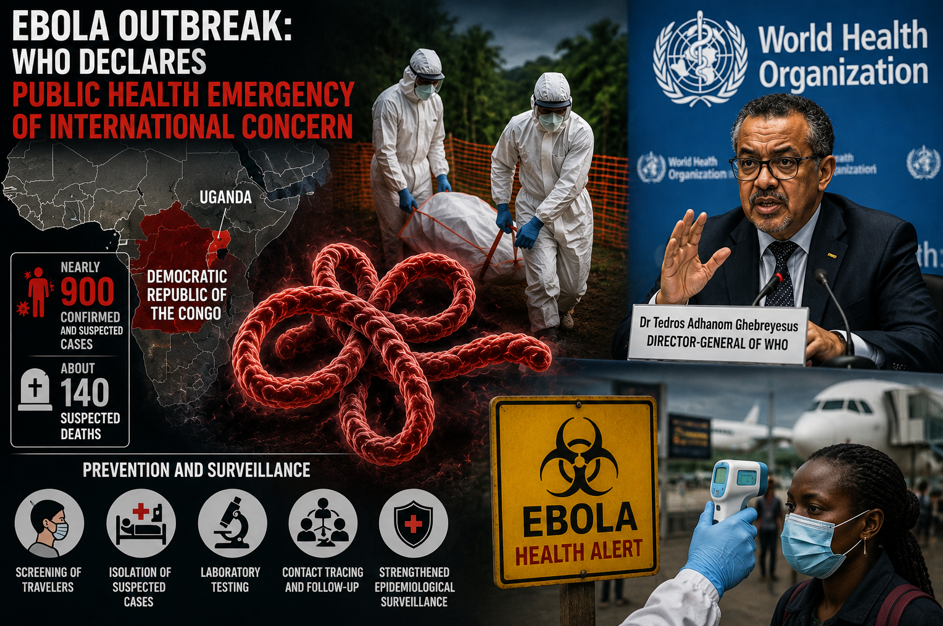
The Director-General of the World Health Organization (WHO), Tedros Adhanom Ghebreyesus, declared that the Ebola outbreak affecting the Democratic Republic of the Congo and Uganda constitutes a public health emergency of international concern, the organization’s highest alert level. Tedros stated that the situation still does not meet the criteria for classification as a pandemic under the International Health Regulations, but warned about the rapid spread of the virus and the growing number of cases. The current outbreak has already accumulated nearly 900 confirmed and suspected infections, along with approximately 140 suspected deaths, increasing concern among international health authorities and governments monitoring the evolution of the disease.
This Content Is Only For Subscribers
To unlock this content, subscribe to INTERLIRA Reports.
Brazil
Specialists in Brazil currently assess that there is no significant risk of Ebola spreading throughout the country in the same way observed in African nations affected by the outbreak. According to infectious disease specialist Leonardo Weissmann, from the Jorge Rossmann Regional Hospital in São Paulo, the virus’s method of transmission makes large-scale international dissemination considerably more difficult. Ebola is transmitted through direct contact with blood, secretions, organs, or other bodily fluids of infected or deceased individuals.
International Emergency
On Thursday (21), the WHO Director-General explained that several factors contributed to the declaration of an international emergency. Among them are the high number of cases and deaths already identified, the circulation of the Bundibugyo strain — for which there are currently no approved vaccines or specific therapies — and the detection of infections in large urban centers in the DRC. Tedros also cited the deaths of healthcare professionals, which indicate transmission linked to medical services, as well as the intense movement of people in Ituri province, one of the most affected regions in eastern Congo. According to the WHO, the security crisis in the region, marked by armed conflicts that intensified at the end of last year, further complicates efforts to contain the outbreak and guarantee medical assistance.
Prevention
Health experts emphasize that the priority at this stage is maintaining epidemiological surveillance systems capable of rapidly identifying suspected cases among travelers arriving from affected areas. Recommended measures include immediate isolation of suspected patients, laboratory testing, contact tracing, and coordinated monitoring between health authorities. Specialists point out that previous Ebola outbreaks demonstrated that efficient public health actions are capable of interrupting transmission chains and preventing international spread when implemented quickly and consistently.

