


Between January and September 2026, reported mobile phone robberies fell by 20% in the state of Rio de Janeiro and by 15.1% in the city of São Paulo, according to their respective state public security agencies. In São Paulo’s capital, however, the combined total of robberies and thefts increased in 17 of the city’s 93 police precincts despite the broader municipal decline. During the same period these figures were released, Operation Rastreio in Rio and Operation Frank Mobile in São Paulo returned recovered devices to victims and shifted law enforcement focus toward the post-theft supply chain. Crime statistics and operational outcomes highlight two key dimensions of the issue: where devices are stolen and how they are reintroduced into circulation.
This Content Is Only For Subscribers
To unlock this content, subscribe to INTERLIRA Reports.
Statewide Decline in Rio and Localized Spikes in São Paulo
According to the Institute of Public Security (ISP), the state of Rio de Janeiro recorded 15,754 mobile phone robberies between January and September 2026, down from 19,684 during the same period in 2025, a 20% decrease. Mobile phone thefts totaled 28,270 incidents, representing an 18% reduction. In the city of São Paulo, overall mobile phone robberies and thefts also declined, with robberies dropping by 15.1%, according to the Secretariat of Public Security (SSP). Nevertheless, the capital still logged nearly 72,000 thefts and approximately 39,000 robberies during the period, averaging 17 incidents per hour. The combined total of both offenses rose in 17 of the city’s 93 police precincts, with Santo Amaro, Consolação, Itaim Bibi, Sacomã, and Pinheiros ranking among the areas with the steepest increases.
Operation Rastreio Coordinates Device Returns in Rio
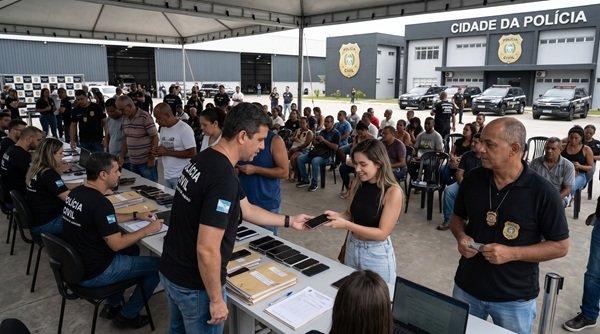
On Tuesday, November 10, the Rio de Janeiro Civil Police organized a mass restitution event to return mobile phones recovered under Operation Rastreio. Roughly 1,800 devices were handed back to owners at the Cidade da Polícia complex in Jacarezinho, in the capital’s North Zone. According to the Civil Police Secretariat, the initiative planned for approximately 3,100 total returns statewide. News portal g1 reported that earlier phases of the operation had recovered 13,800 phones, with around 6,000 already returned by that date. The Civil Police also announced plans to intensify enforcement against fences, who sustain market demand for illicitly sourced electronics.
Operation Frank Mobile Maps Resale Chain in São Paulo
Conducted in September by the Civil, Military, and Penal Police alongside the São Paulo Public Prosecutor’s Office, Operation Frank Mobile mapped the stages of the illicit resale supply chain, spanning initial fencing, device unlocking, component stripping, and retail resale. On October 19, authorities began returning recovered phones to identified owners. To trace the devices, investigators cross-referenced police report records against active mobile line data. The IMEI (the unique hardware identifier assigned to each handset) plays a decisive role in linking a recovered phone to a victim’s report. According to radio network CBN, forensic teams can extract this code directly, though owner identification is significantly faster when the victim includes the IMEI in the initial police filing.
Analysis
Declines in citywide or statewide aggregate crime figures can coexist with heightened risk exposure in specific micro-locations, as demonstrated by the 17 São Paulo police precincts, several of them major commercial hubs, where combined mobile phone robberies and thefts increased.
For corporate organizations, granular precinct-level data is essential for guiding risk assessments related to employee transit and frequent public phone usage. Meanwhile, recent police operations underscore the operational importance of formal crime reporting and IMEI documentation in recovering stolen hardware.
For corporate mobile fleets, maintaining an up-to-date asset inventory containing each device’s IMEI streamlines police reporting, while immediate remote wiping and revocation of corporate network credentials mitigate data breach exposure following a theft. Evaluating the long-term deterrent effect of these crackdowns requires tracking crime trends across targeted precincts over subsequent quarters while accounting for parallel variables, such as shifts in street-level policing deployments.
Sources: CBN; Metropoles; O Globo; G1.

