

Online scams have become increasingly common, demanding greater attention to the links and online content we interact with daily. Cybercriminals are constantly creating new methods to deceive people for financial gain, ranging from falsified payment receipts to fake technician impersonations. In Brazil, around 71% of the population has already fallen victim to this type of crime, which shows the need for caution when clicking on links in WhatsApp messages, emails, or SMS, as well as avoiding sharing personal information with strangers. To reduce risks, it is essential to understand how these scams work, recognize their main types, learn what to do if you are targeted, and adopt preventive measures to protect your data and avoid financial losses.
This article is part of a series on digital security. You can read the other texts here.
This Content Is Only For Subscribers
To unlock this content, subscribe to INTERLIRA Reports.
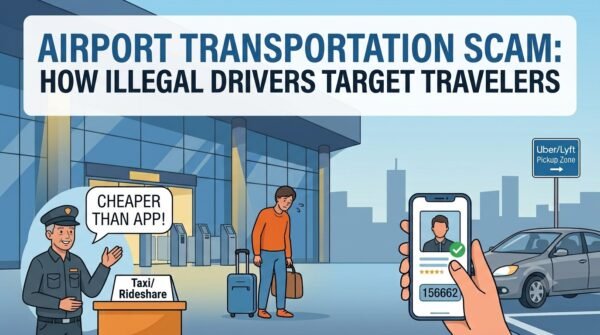
Airport Transportation Scam: How Illegal Drivers Target Travelers
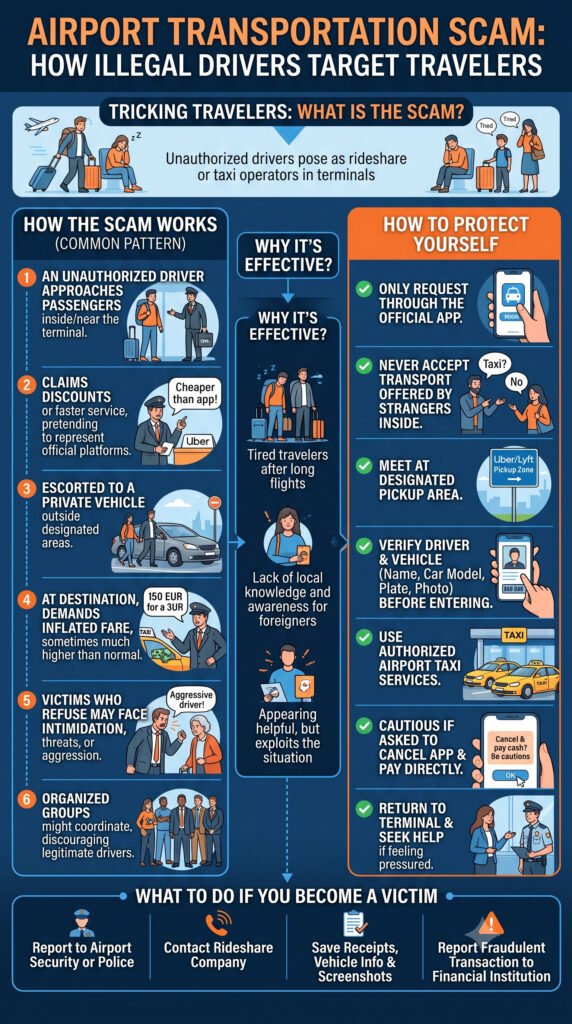
Travelers arriving at airports are increasingly being targeted by illegal drivers posing as rideshare drivers or offering “cheaper” transportation. These scammers often approach passengers inside or outside airport terminals, pretending to represent legitimate ride-hailing services. Once the passenger accepts the ride, they may be charged excessive fares, intimidated into paying, or taken on unnecessary routes to increase the cost. The scam commonly targets tourists, elderly passengers, foreigners, and travelers unfamiliar with the airport.
How the Scam Works
The scam typically follows this pattern:
- An unauthorized driver approaches passengers inside or near the terminal, offering immediate transportation.
- The driver claims to work for a ride-hailing platform or offers a discounted or faster service.
- The passenger is escorted to a private vehicle outside the designated pickup area.
- At the destination, the driver demands an inflated fare—sometimes many times higher than the normal price.
- Victims who refuse to pay may face intimidation, verbal threats, or aggressive behavior.
- In some cases, organized groups coordinate these operations, discouraging legitimate rideshare drivers and licensed taxi operators from approaching passengers.
Why the Scam Is Effective
- After a long flight, many travelers are tired, unfamiliar with the airport, or eager to reach their destination quickly. Criminals exploit this situation by appearing friendly, professional, and helpful.
- Foreign visitors and first-time travelers are especially vulnerable because they may not know local transportation procedures or typical fares.
How to Protect Yourself
To avoid becoming a victim:
- Request your ride only through the official rideshare app.
- Never accept transportation offered by strangers inside the terminal.
- Meet your driver only at the designated pickup area.
- Verify the driver’s name, vehicle model, license plate, and photo before entering the car.
- If using a taxi, choose only authorized airport taxi services.
- Be cautious if someone insists on canceling the app ride and paying directly.
- If you feel pressured or uncomfortable, return to the terminal and seek assistance from airport staff or security personnel.
What to Do if You Become a Victim
If you are threatened or overcharged:
- Report the incident immediately to airport security or local police.
- Contact the rideshare company if the scam involved its name or platform.
- Save receipts, payment records, vehicle information, and screenshots if available.
- If payment was made by credit card or digital wallet, contact your financial institution as soon as possible to report the fraudulent transaction.
Airport transportation scams are often carried out by organized groups that rely on confusion and urgency. Using only official transportation services and verifying the driver’s identity before entering the vehicle remain the best ways to stay safe.