


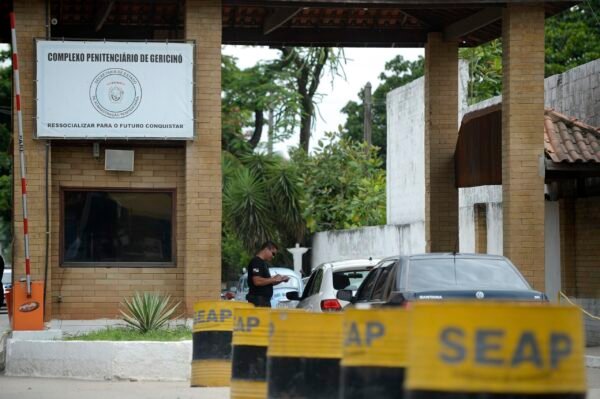
The State Secretariat of Penitentiary Administration (SEAP) has developed a project to strengthen security at the Gericinó Penitentiary Complex, in Rio de Janeiro’s West Zone, through the construction of a perimeter wall approximately four kilometers long. The structure will surround all 22 prison units in the complex and will be equipped with motion detectors and other surveillance technologies. The initiative comes after authorities identified a series of security vulnerabilities that, according to SEAP, have been systematically exploited by organized crime groups. The complex houses more than 22,000 inmates, including some of the country’s most dangerous criminals. Concerns intensified after authorities uncovered a sophisticated escape plan linked to members of the Red Command (CV), who allegedly monitored prison officers for nearly two months while preparing an operation to free inmates from one of the facilities.
This Content Is Only For Subscribers
To unlock this content, subscribe to INTERLIRA Reports.
Attempted Escape
According to SEAP, the surveillance operation was intended to gather detailed information about security routines and facilitate the escape of four inmates held at the Nelson Hungria Prison. In the early hours of December 21, the plan began to unfold. The prisoners reportedly cut through bathroom bars in an attempt to leave the unit and meet accomplices positioned outside the prison walls. The scheme was ultimately uncovered after police detected an attempted breach at the neighboring Lemos Brito Prison. Members of the criminal group mistakenly threw tools and equipment designed for cutting bars over the wall of the wrong prison unit, believing they were targeting Nelson Hungria. The error exposed the operation and prevented the escape from being carried out.
Weaknesses
An internal report produced by SEAP’s Intelligence Sub-Secretariat concluded that the criminal group had developed a highly detailed operational plan. Investigators found that the organization had gathered information on vulnerable points within the prison complex, including the locations of guarded and unguarded watchtowers, as well as the schedules and movement patterns of security personnel at both Nelson Hungria and Lemos Brito prisons. According to the report, the criminals used phone calls, voice messages, and video recordings to document and share information about the daily routines of prison staff, allowing them to build a comprehensive picture of the security structure before attempting the escape.
Domination of Nearby Favelas
For at least two years, SEAP has warned about efforts by the CV to expand its influence into the communities surrounding the prison complex. Authorities believe the faction’s objective is to establish territorial control around the facilities where several of its top leaders are incarcerated, creating a protective ring of influence around the prison system. According to intelligence assessments, the strategy focuses primarily on the communities of Jardim Bangu, Catiri, and Vila Kennedy. The first two areas remain largely under militia influence but have been the target of repeated incursions by CV members seeking to expand their presence. Investigators also report that these communities have been used as staging areas from which criminals throw drugs, cell phones, and other prohibited items into prison units.
New Security Infrastructure
At present, the Gericinó complex does not have a single continuous perimeter barrier. Instead, each of the 22 prison units relies on its own individual security systems. Under the new project, all facilities would be enclosed within a unified security perimeter consisting of a reinforced wall and fencing up to 3.6 meters high. The structure would also include concertina wire, motion sensors, and additional monitoring equipment designed to detect suspicious activity around the complex. According to Secretary of Penitentiary Administration Maria Rosa Lo Duca Nebel, the project represents a major investment in prison security and is intended to significantly reduce vulnerabilities that have been exploited by organized criminal groups in recent years.
Analysis:
The planned security upgrades at the Gericinó Penitentiary Complex illustrate how organized crime groups continue to view prisons not merely as detention facilities, but as strategic operational hubs. The alleged escape plan demonstrates a high degree of planning, intelligence gathering, and external coordination, revealing that criminal organizations are capable of monitoring prison routines and identifying vulnerabilities over extended periods. The fact that the operation failed due to an execution error rather than a lack of preparation raises concerns about the level of sophistication these groups have achieved in attempting to influence events inside and outside prison walls.
The situation also reflects the growing importance of territorial control around prison complexes. Intelligence reports suggesting efforts by the Red Command to expand its presence in nearby communities indicate that the organization seeks to create a security buffer around facilities where key leaders are incarcerated.

