


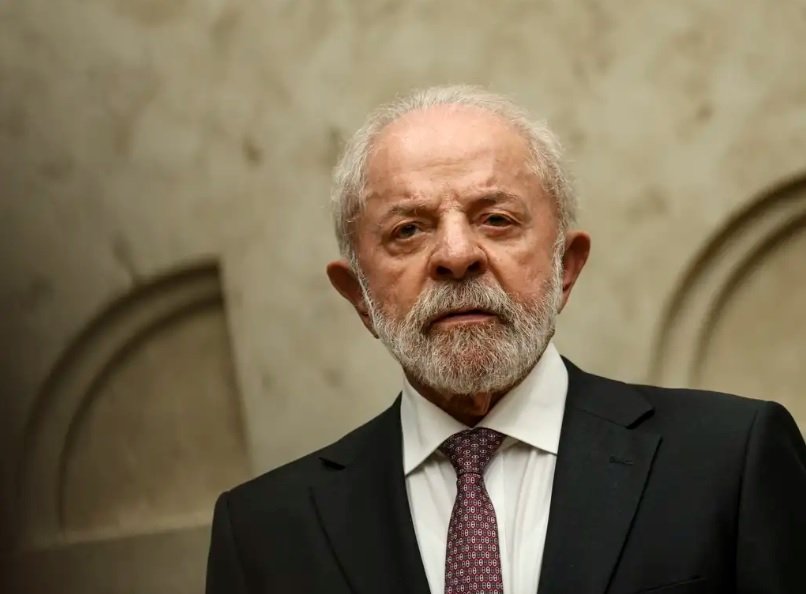
Brazil is approaching a decisive moment ahead of the elections, marked by a tightening presidential race, growing political mobilization, and mounting economic pressure. Recent polling indicates a highly competitive scenario, with President Lula facing strong opposition from right-wing candidates, while security officials across the country are leaving their posts to enter politics, reinforcing the centrality of public safety in the campaign. At the same time, the government is attempting to contain the economic impact of rising fuel prices through subsidies and policy adjustments, even as internal tensions emerge in key state-owned companies such as Petrobras. Parallel to these developments, negotiations in Brasília over appointments to the Supreme Federal Court reveal ongoing efforts by the Executive to consolidate political support within Congress. Together, these elements reflect an increasingly complex environment in which electoral strategy, economic management, and institutional dynamics are deeply intertwined.
This Content Is Only For Subscribers
To unlock this content, subscribe to INTERLIRA Reports.
Technical Tie
President Lula (PT) has lost his numerical advantage in a potential second round of this year’s presidential election, according to a Datafolha poll. For the first time, he was slightly overtaken by Flávio Bolsonaro (PL), who reached 46% of voter intentions compared to Lula’s 45%. In matchups against other potential candidates, such as Ronaldo Caiado (PSD) and Romeu Zema (Novo), Lula records 45% against their 42%. All scenarios, however, fall within the margin of error of two percentage points, meaning they are considered technical ties. The survey interviewed 2,004 voters across 137 municipalities between Tuesday (7) and Thursday (9). This is the first poll reflecting a more defined field of pre-candidates following the official entry of Caiado into the race. Among Lula’s potential opponents, Caiado showed the greatest growth compared to the previous survey conducted in early March. His rise consolidates competition within the right-wing spectrum, alongside Flávio Bolsonaro and Zema, reducing space for a centrist alternative in the election.
Security Managers
In the run-up to an election expected to place public security at the center of political debate, several officials responsible for coordinating anti-crime policies have stepped down from their positions to pursue electoral ambitions. A survey by GLOBO indicates that at least 15 former Secretaries of Public Security or senior commanders of the Military and Civil Police have announced their intention to run for office in October. These figures are spread across 12 states, representing nearly half of Brazil’s federal units, and include candidates from all regions of the country. One of the most prominent names is former São Paulo Secretary of Public Security Guilherme Derrite (PP), a reserve military police officer who held the position from 2023 until November of last year and will now run for the Senate in São Paulo. With a strong presence on social media, including 1.5 million followers on Instagram, Derrite exemplifies a broader trend among security figures entering politics, combining digital outreach with narratives centered on policing, public security investments, and criticism of federal policies. The movement made by members of the security forces represents the intention of these professionals to participate in the legal decisions regarding the topic. The group gained strength after the election of Jair Bolsonaro, and they remain relevant since then.
Diesel Price
The Lula (PT) administration announced on Monday (06/04) a new package of measures aimed at containing rising fuel and energy costs, including the creation of an additional subsidy for diesel and cooking gas, as well as the elimination of PIS/Cofins taxes on biodiesel and aviation kerosene. The initiative represents another attempt by the federal government to mitigate the economic impact of the war in Iran, which has contributed to increased international oil prices and, consequently, higher fuel and airfare costs. These price pressures are a major concern for President Lula in an election year. The total fiscal impact of the measures is estimated at R$ 31 billion. Under the new policy, the diesel subsidy will increase from the previously announced R$ 0.32 per liter to R$ 1.12 per liter for domestically produced fuel and up to R$ 1.52 per liter for imported diesel. Despite the intervention, Finance Minister Dario Durigan acknowledged that external and “uncontrollable effects” continue to influence final consumer prices, meaning that further increases at the pump cannot be ruled out.
Dismissal at Petrobras
The board of directors of Petrobras approved on Monday (06/04) the dismissal of Cláudio Schlosser, the company’s Director of Logistics, Commercialization and Markets, who oversaw fuel sales and pricing policies. The decision comes amid growing political pressure from President Lula to reverse the results of a recent auction for the sale of cooking gas, which generated premiums of up to 117% above standard refinery prices. The episode intensified tensions within the state-owned company, as the government seeks to exert greater influence over pricing mechanisms in order to contain inflationary pressures and avoid further public dissatisfaction.
Nomination to the Supreme Court
To secure sufficient support in the Senate for the approval of Jorge Messias as a justice of the Supreme Federal Court (STF), the Planalto Palace has placed the allocation of positions in regulatory agencies and public bodies at the center of negotiations with lawmakers. Government strategists view this approach as a way to overcome resistance to the current Attorney General of the Union, whose confirmation process had been stalled for nearly five months due to a lack of political backing. Messias’s confirmation hearing has now been scheduled for April 29. The issue was discussed during a meeting between President Lula and Senate President Davi Alcolumbre (União Brasil) at the end of last month. The government currently has at least 14 positions in regulatory agencies and administrative bodies that are vacant or will soon become available due to the expiration of mandates. Lula originally nominated Messias in November 2025, following the early retirement of Justice Luís Roberto Barroso. However, the choice faced opposition from Alcolumbre, who had advocated for the appointment of Senator Rodrigo Pacheco (PSB-MG), a political ally.
Analysis:
Brazil is entering a highly competitive and fragmented electoral phase in which traditional political advantages appear increasingly unstable. The narrowing gap between Lula and Flávio Bolsonaro reflects not only electoral polarization but also a broader reconfiguration within the right, with figures such as Ronaldo Caiado and Romeu Zema gaining traction. This dynamic suggests that the 2026 race may not be defined solely by a binary dispute, but by competition within ideological blocks, particularly on the conservative side. In this context, voter volatility and the margin of error become decisive factors, reinforcing the uncertainty of electoral projections and increasing the importance of coalition-building and regional political strength.
The growing presence of public security officials entering electoral politics indicates a strategic shift in campaign narratives, with crime and policing likely to occupy a central role in public debate. Candidates with backgrounds in law enforcement tend to mobilize segments of the electorate concerned with urban violence, while also bringing technical legitimacy to discussions on security policy. However, this trend may also contribute to the politicization of security institutions, raising questions about the balance between professional expertise and political positioning.
Sources: A Folha de SP [1], [2], [3], [4], [5], [6]; O Globo [1], [2], [3].

