


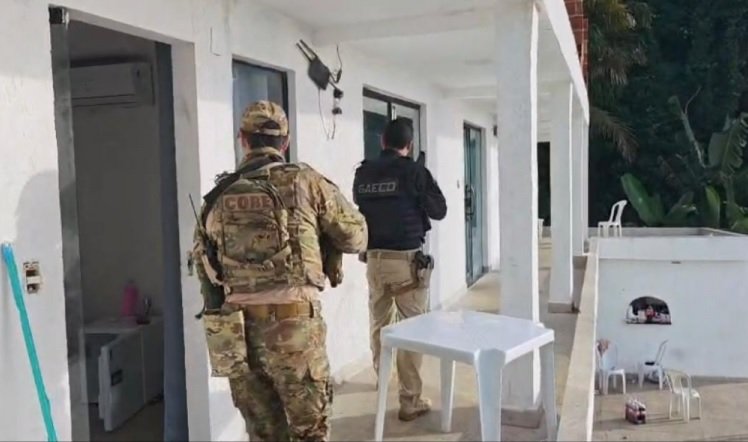
A large-scale operation by the Civil Police of Rio de Janeiro targeting leaders of the Red Command faction operating in Bahia triggered an intense shootout in the Vidigal community, in the South Zone of Rio, on Monday morning (20/04). The action, carried out with support from specialized units, caused widespread disruption in the region and moments of panic among residents and commuters. During the operation, heavily armed criminals attempted to block police access by placing a bus across Avenida Niemeyer—one of the main coastal roads connecting São Conrado to Leblon—and setting up barricades using Comlurb waste containers. The road remained obstructed for several hours and was only cleared around 6:50 am, when a convoy from the Military Police escorted drivers through the area to restore traffic flow.
This Content Is Only For Subscribers
To unlock this content, subscribe to INTERLIRA Reports.
Shootout
Residents described a morning marked by fear and uncertainty, with gunfire reported in multiple parts of the community. According to witnesses, the shooting began at dawn and quickly spread across different sections of the hill, forcing many people to remain inside their homes. Videos shared on social media captured the intensity of the confrontation, including footage of a police helicopter flying at low altitude over Vidigal. In several recordings, it is possible to hear what appears to be repeated gunshots as the aircraft moves through the area, indicating ongoing exchanges of fire between police and suspects. The situation generated significant tension among residents, who reported difficulty moving around safely during the operation.
Stranded Tourists
At the top of Morro Dois Irmãos, a well-known tourist attraction, approximately 200 visitors were left stranded and unable to descend due to the ongoing shootout. The trail that leads to the summit—frequently used by tourists during the early morning hours to watch the sunrise—begins within the Vidigal community, placing visitors directly in the affected area. According to reports, guides instructed the group to remain crouched and seek shelter while gunfire was ongoing. Around 7:20 am, once the situation was partially brought under control, the tourists were able to leave the location and descend the hill under the supervision of authorities, passing through streets filled with armored vehicles and police units.
Target operates in Caraíva and held a party in Vidigal
According to the Civil Police, officers from the Special Resources Coordination (CORE) participated in the operation, which was coordinated in conjunction with the Public Prosecutor’s Office of Bahia. The objective was to execute arrest warrants against leaders of the CV involved in drug trafficking activities in southern Bahia. The main target was Edinaldo Pereira Souza, known as Dada, identified as a key figure in trafficking operations in the Caraíva region. Authorities report that in 2024 he escaped from a prison in Bahia along with 15 other inmates and subsequently went into hiding in Rio de Janeiro, specifically in Rocinha, under the protection of the faction. In recent days, he had moved to a rented property in Vidigal, a neighboring community, where he was reportedly hosting a gathering with family members and associates at the time of the police operation.
Analysis:
The operation in Vidigal illustrates the increasingly interconnected nature of organized crime in Brazil, where criminal leaders operate across state borders and rely on safe havens in major urban centers. The presence of a high-ranking figure linked to the Red Command in Rio de Janeiro, despite its activities being based in Bahia, reflects a networked structure that allows mobility, protection, and coordination between different regions. The intensity of the confrontation and the tactics used by criminals, such as blocking Avenida Niemeyer and deploying barricades, demonstrate a level of territorial control that goes beyond simple criminal activity, as these actions are designed not only to delay police advances but also to assert dominance over strategic urban spaces and critical mobility corridors.
From a security perspective, the episode reinforces the challenges of conducting high-impact operations in densely populated areas with significant civilian presence. The ability to disrupt a major road connecting areas like São Conrado and Leblon shows how these groups can temporarily affect the functioning of the city, while the situation involving stranded visitors at Morro Dois Irmãos underscores the risks created by the overlap between conflict zones and tourist activities, particularly in areas where informal access routes intersect with territories under criminal influence.

