


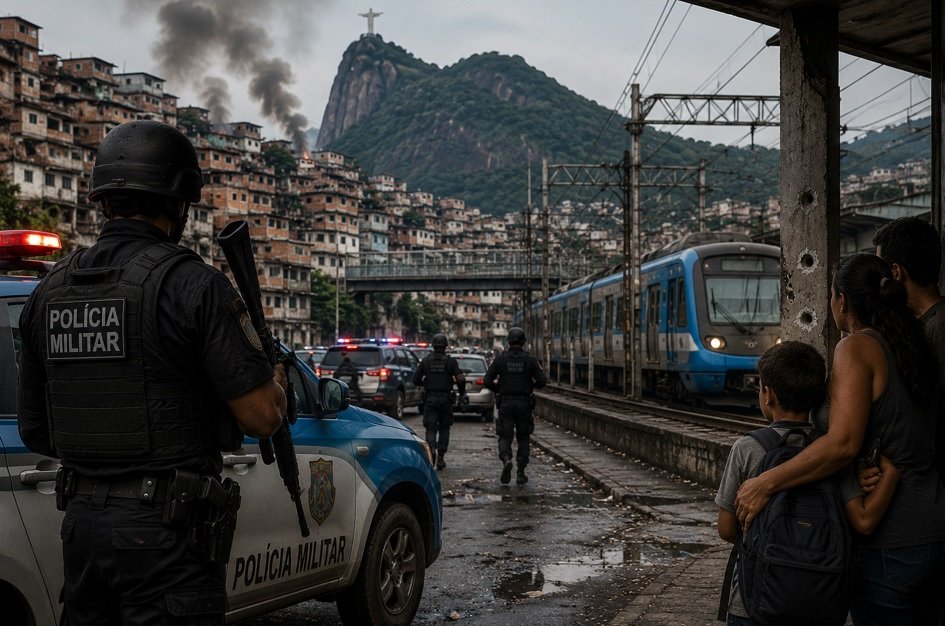
Armed violence linked to robberies and attempted robberies intensified across the metropolitan region of Rio de Janeiro in April 2026. According to data compiled by the Fogo Cruzado Institute, at least 30 people were shot during these types of incidents throughout the month, averaging one shooting victim per day. The figure represents a 50% increase compared to April 2025, when 20 people were injured in robberies or attempted assaults involving firearms. Despite the rise in violence during robberies, the overall number of shootings recorded in the metropolitan area declined during the same period, indicating a more concentrated but still highly lethal pattern of urban violence.
This Content Is Only For Subscribers
To unlock this content, subscribe to INTERLIRA Reports.
Victims
Among the victims was Marcos Vinícius Cerqueira Oliveira, who was killed on April 28 while accompanied by his 7-year-old son during an attempted robbery on Rua Dulce Rosalina, in the neighborhood of São Cristóvão, in Rio’s North Zone. Cases involving victims caught in armed robberies continue to contribute to growing fear among residents, particularly in areas with heavy traffic and frequent reports of street crime.
Shootings
Although armed robberies became more violent, the total number of shootings mapped by the Fogo Cruzado Institute continued to decline. During April, 165 incidents involving firearms were recorded across the metropolitan region, representing a 13% reduction compared to the 189 shootings documented in the same month of 2025. These incidents left 122 people shot, including 47 fatalities and 75 injured victims. The data reflect a complex security scenario in which the frequency of shootings decreased, but the level of violence in certain criminal situations remained severe.
Police Operations
Police operations accounted for 88 of the shootings recorded during the month, corresponding to 53% of all firearm incidents registered in April — the highest proportion recorded in 2026 so far. According to the report, these operations resulted in 17 deaths and 48 injuries. At the same time, clashes between criminal factions and militias continue to intensify throughout the metropolitan region. The year 2026 has already registered the highest number of people shot in disputes involving armed groups, with 102 victims during the first four months of the year. In April alone, authorities recorded 13 shootings related to faction or militia conflicts, averaging nearly one confrontation every two days and leaving 21 people shot. On April 26, a gun battle between armed groups in Jardim América, in Rio’s North Zone, injured two people and disrupted the circulation of SuperVia trains in the Baixada Fluminense region.
Municipalities
With 101 shootings mapped during the month, the city of Rio de Janeiro concentrated 61% of all firearm incidents recorded across the metropolitan region. Among the municipalities most affected by armed violence were:
- Rio de Janeiro: 101 shootings, 25 dead, and 51 wounded
- São Gonçalo: 17 shootings, 6 dead, and 11 wounded
- Duque de Caxias: 9 shootings, 7 dead, and 2 wounded
- Nova Iguaçu: 9 shootings, 5 dead, and 1 wounded
- Niterói: 9 shootings, 1 dead, and 2 wounded
Neighborhoods
The neighborhoods most affected by armed violence during April were concentrated mainly in the North and West Zones of Rio de Janeiro:
- Maré: 6 shootings and 3 wounded
- Taquara: 5 shootings, 1 dead, and 4 wounded
- Curicica: 5 shootings, 1 dead, and 2 wounded
- Piedade: 5 shootings, 1 dead, and 2 wounded
- Barros Filho: 5 shootings and 5 injured victims
Analysis:
The reduction in the total number of shootings across the metropolitan region suggests that Rio’s security scenario cannot be interpreted solely through aggregate statistics. Although firearm incidents declined overall, the persistence of highly violent robberies indicates that armed crime is becoming more concentrated and unpredictable. This pattern is especially concerning because robberies tend to affect civilians directly and randomly, increasing fear among the population even in periods when broader indicators appear to improve. The data also reinforces the idea that organized criminal groups continue to rely heavily on armed intimidation and territorial control, while the easy circulation of firearms contributes to the escalation of violence in situations that previously might not have resulted in shootings.
Police operations remain a central component of Rio’s security strategy, accounting for more than half of all shootings recorded during the month, but the continued growth of violence linked to robberies and disputes between criminal factions demonstrates the limitations of predominantly reactive approaches. Areas such as Maré, Taquara, Curicica, and São Gonçalo continue to experience recurring armed confrontations that disrupt transportation, commerce, and public life.
Sources: Fogo Cruzado; Extra.

