


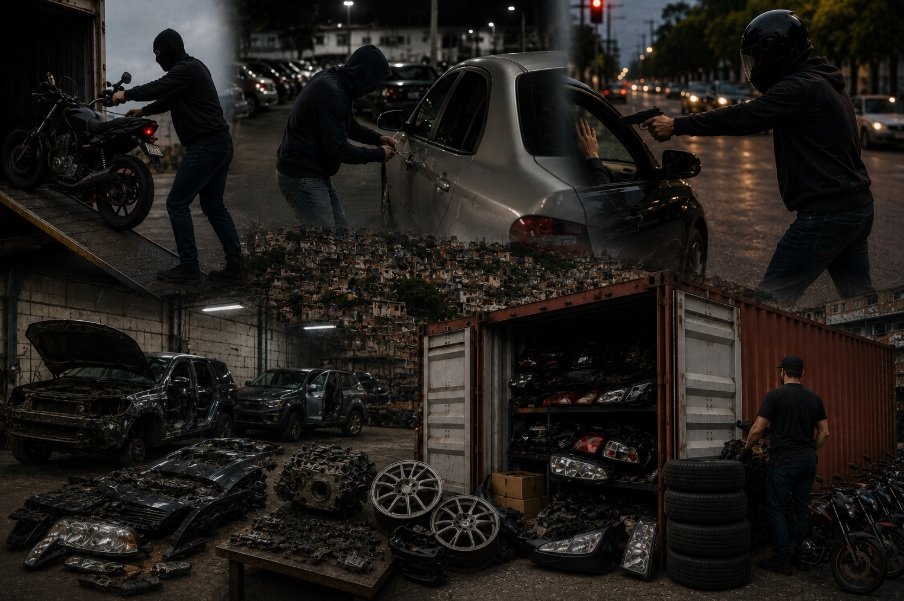
Last year, the state of Rio de Janeiro recorded 25,235 vehicle robberies and 17,490 vehicle thefts. In the capital alone, criminals stole or robbed 22,598 cars and motorcycles. However, the geographic distribution of these crimes is highly concentrated. According to a study released on Tuesday (23/06) by the Public Security Institute (ISP), half of all vehicle robberies and thefts in the city occurred within an area representing just 4.3% of Rio de Janeiro’s urban territory. The study also found that, of the 17,288 vehicles recovered across the state in 2025, approximately 18% were located in the areas of Chapadão, Pedreira, Juramento, Manguinhos, Parque Arará, and the Complexo da Maré, all regions with a significant presence of organized crime.
This Content Is Only For Subscribers
To unlock this content, subscribe to INTERLIRA Reports.
Car Recovery
The study also found that stolen cars are recovered far more frequently than motorcycles. While more than 80% of stolen cars are eventually returned to their owners, only 4.5% of motorcycles taken in robberies are recovered. In 2025, according to the study Vehicle Theft and Recovery: Crime Patterns in the State of Rio de Janeiro, 13,989 cars were stolen through theft, of which 11,273 were recovered, representing 80.6% of the total. Regarding vehicles stolen through robbery, the data show that 46.4% of cars were eventually recovered by law enforcement authorities.
Motorcycle Recovery
Motorcycles, by contrast, continue to have very low recovery rates, regardless of whether they were stolen through robbery or theft. Of the 11,246 motorcycles stolen during robberies, only 509 were recovered, representing 4.5% of the total. Unlike cars, motorcycles stolen through theft show a slightly higher recovery rate than those taken during robberies. Of the 7,208 motorcycles reported stolen through theft, 541 were recovered, equivalent to 7.5% of all reported cases.
Rapid Reporting
Approximately 80% of all stolen or robbed vehicles recovered in Rio de Janeiro state last year were found in five municipalities: the capital, Duque de Caxias, São Gonçalo, Belford Roxo, and São João de Meriti. Most recoveries occurred within or near areas controlled by criminal organizations. The study also indicates that victims generally report these crimes quickly. Around 92.2% of car thefts and robberies and 91.8% of motorcycle thefts and robberies were reported to the police within three days of the incident, improving the chances of vehicle recovery.
Analysis:
The ISP study reinforces a long-standing characteristic of vehicle crime in Rio de Janeiro: its strong geographic concentration. The fact that half of all vehicle robberies and thefts occur within only 4.3% of the city’s territory demonstrates that these crimes are not randomly distributed but are closely linked to areas where criminal organizations maintain operational control and logistical infrastructure.
The contrast between car and motorcycle recovery rates reveals important differences in criminal markets. Cars retain significant value as assets that can be resold, dismantled for parts, or used in other criminal activities, which creates opportunities for law enforcement to track and recover them. Motorcycles, however, appear to move much faster through illegal supply chains. Their small size, ease of transportation, and strong demand in informal markets make them particularly attractive targets for criminals. The extremely low recovery rates indicate that many motorcycles are quickly dismantled, sold, or relocated before authorities can identify their whereabouts, making recovery efforts substantially more difficult.

