


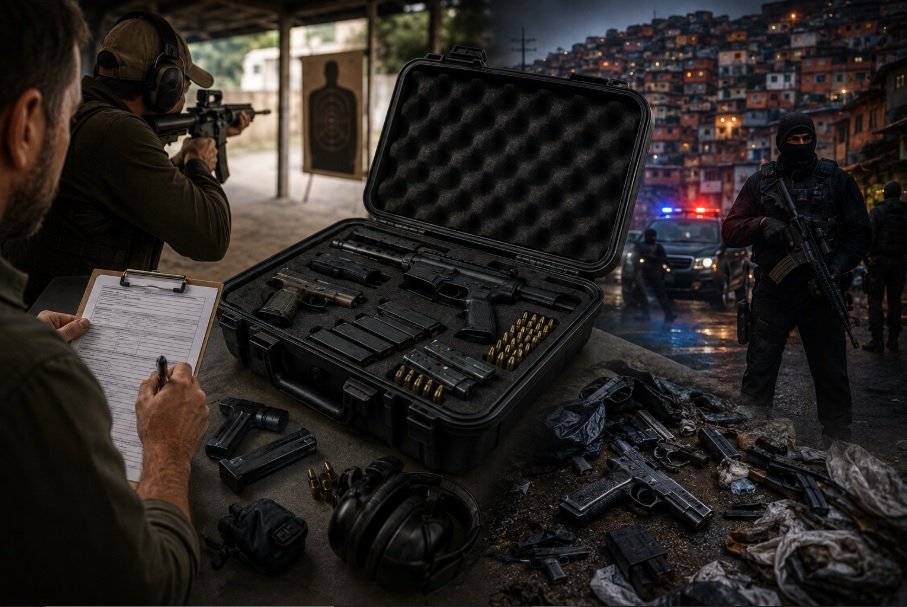
A survey shows that more than 12,000 firearms belonging to CACs—collectors, sport shooters, and hunters—were stolen or lost over a period of three and a half years. The figure raises concerns about the whereabouts of these weapons and the possibility that some may eventually fall into the hands of criminals or be diverted to the illegal market. The issue has gained particular relevance amid the growing presence of heavily armed criminal groups in several Brazilian states, increasing concerns over the circulation and control of legally registered firearms.
This Content Is Only For Subscribers
To unlock this content, subscribe to INTERLIRA Reports.
CAC Data
In addition to the illegal routes used to smuggle firearms into the country, the growing number of missing weapons registered to CACs has become an important security concern. According to the Army, which is responsible for managing the registry, more than 12,000 firearms disappeared over a three-and-a-half-year period. Nearly half of the cases involved weapons reported as lost, with more than 5,300 incidents. The second-largest category was theft, involving property taken without the use of force or threats, with more than 4,800 cases. Robberies, involving violence or intimidation, accounted for more than 1,800 firearms. The figures highlight the difficulty of ensuring that weapons legally acquired by CACs remain under the control of their registered owners throughout their period of possession.
Growth in the CAC Category
As the number of sport shooters increases, there has also been a significant rise in the circulation, purchase, sale, loss, and disappearance of firearms. Brazil currently has more than one million registered sport shooters, reflecting the rapid expansion of this category in recent years. The number of registered firearms is considerably higher, reaching nearly 1.7 million. This difference reflects the fact that each CAC is authorized to keep multiple firearms, with the permitted limit reaching up to 16 weapons per individual. The scale of this registered arsenal increases the importance of effective controls over storage, transportation, transfers, and the reporting of weapons that are lost, stolen, or otherwise removed from the possession of their legal owners.
Analysis:
The disappearance of more than 12,000 firearms registered to CACs over three and a half years represents a significant firearms-control challenge, particularly because these weapons entered civilian circulation through a legal regulatory framework. The distinction between lost firearms, thefts, and robberies is important, but all three categories pose the same fundamental security problem once a weapon leaves the registered owner’s possession. In a context where criminal organizations possess increasingly sophisticated arsenals, firearms that disappear from the legal market can potentially become an additional source of weapons for illicit networks, even if only a fraction are ultimately diverted to criminals.
The rapid expansion of the CAC category makes the issue more complex. With more than one million registered sport shooters and nearly 1.7 million firearms, the scale of the civilian arsenal requires effective mechanisms for monitoring ownership, storage, transportation, and transfers. Allowing individual CACs to possess multiple firearms also increases the importance of regular inspections and accurate databases capable of identifying discrepancies between registered weapons and weapons physically held by their owners.
Sources: R7.

