


Summary
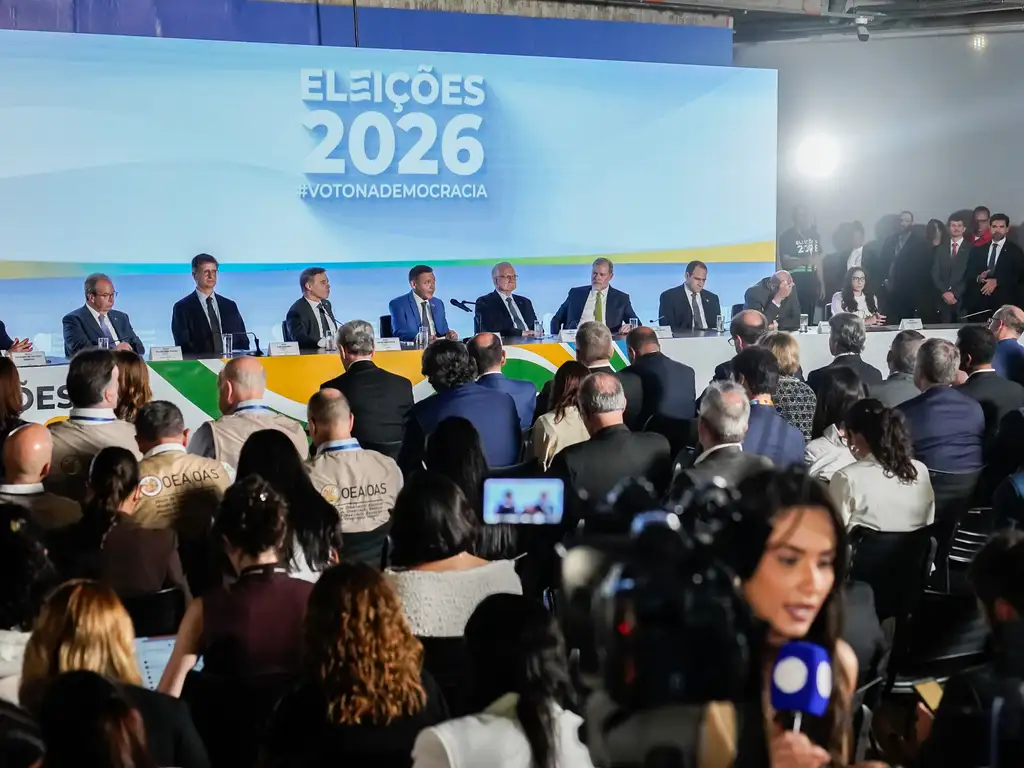
Part 1 examined how fear of crime has reshaped Brazilian political rhetoric and how organized crime has moved from being a target of policy to an active player inside the political system. This installment follows that dynamic into the electoral process. With the first round completed on October 4 and Brazil heading toward an October 25 runoff between Flávio Bolsonaro and Luiz Inácio Lula da Silva, the election has already tested the institutions responsible for protecting political actors, regulating digital campaigning, countering extremist threats, and safeguarding the vote. The first round proceeded without serious incidents capable of significantly compromising voting, but political violence, AI-generated content, platform enforcement, and extremist mobilization remain relevant risks ahead of the runoff.
This Content Is Only For Subscribers
To unlock this content, subscribe to INTERLIRA Reports.
Introduction
Brazil’s 2026 election has moved from anticipated risk to a stage in which institutional resilience can be assessed against actual events. On October 4, Flávio Bolsonaro and President Luiz Inácio Lula da Silva advanced to a second round scheduled for October 25. Despite concerns over political violence, digital manipulation, and extremist activity, the Superior Electoral Court (TSE) reported that voting proceeded normally, with no serious incidents significantly compromising the vote.
That orderly first round does not eliminate the underlying risks. Instead, it provides a clearer basis for evaluating them. The campaign has confronted authorities with lethal violence involving political figures, disputes over AI-generated political content, difficulties translating electoral rules into platform enforcement, and an alleged extremist plot linked to the election calendar. Together, these developments show an electoral system that has so far remained operationally resilient while still facing evolving physical and information-security threats.
Violence Against Political Figures
Political Gender Violence
Political violence against women has escalated dramatically in Brazil, with Electoral Court (TSE) cases increasing more than elevenfold from 15 in 2022 to 177 in 2026. Data from the Federal Public Prosecutor’s Office (MPF) reveals over 430 formal complaints since 2018, predominantly involving moral and psychological violence such as defamation, virtual intimidation, physical threats, and extreme cases like the murder of councilwoman Elisane Rodrigues dos Santos, in Formigueiro, Rio Grande do Sul state, by criminals connected to a gang, in June 2025. This violence disproportionately targets Black and LGBT candidates, discouraging female representation in a country where women hold only 17.5% of seats in Parliament and over 700 municipalities have no female elected officials.
Lethal Violence
The 2026 electoral environment has unfolded against a broader pattern of lethal violence involving political figures, particularly at the municipal level. On August 20 in Tanguá, in Rio de Janeiro’s Metropolitan Region, municipal councilman Alexsandro Gusmão Duarte, known as “Sandrinho Oficina do Som” (PP), was shot dead at the age of 45. Masked gunmen armed with rifles reportedly arrived at the establishment where he was located and opened fire. His brother was also wounded but survived. Duarte, serving his first term after receiving 710 votes in the 2024 municipal election, was taken to an emergency unit but died from his injuries. Police opened an investigation, and subsequent inquiries indicated that at least three people may have participated in the attack.


Although the assault appears to have deliberately targeted Duarte, no publicly confirmed evidence has established a political motive. This distinction matters because violence against elected officials can arise from political disputes, organized-crime interests, competition over local resources, personal conflicts, or conventional criminality. Even so, the case fits a broader pattern identified by a USP and Cebrap study that recorded 1,228 victims of lethal political violence in Brazil between 2003 and 2023, including 760 deaths, 358 attempted murders, and 110 serious death threats.
The study found that 88% of cases involving politicians affected actors operating at the municipal level. Rio de Janeiro ranked among the states with the highest incidence of crimes against politicians, at 11.4 cases per million voters, with researchers pointing to militias and organized crime as part of the state’s political-security environment. Nationwide, 47% of threats, attempted murders, and killings were associated with disputes over political positions, power, or public resources, while 88% of completed murders involved firearms. Duarte’s killing should therefore be understood within a wider pattern of risk affecting local political actors, without assuming a political motive before investigators establish one.
Guarding the Candidates
The federal response shows that authorities treated candidate security as a significant concern. The Federal Police prepared a nationwide operation capable of protecting up to ten presidential candidates simultaneously, mobilizing as many as 458 personnel and, depending on risk, armored vehicles, tactical units, anti-drone equipment, facial-recognition systems, bomb-inspection resources, and digital-threat monitoring.
The first round provides a broader measure of this effort. According to the TSE, 321,040 public-security personnel were mobilized nationwide on October 4, including state forces, the Federal Police, Federal Highway Police, and National Force. Authorities recorded 907 electoral crimes, with campaigning at polling locations and irregular electoral propaganda among the most frequent offenses. Nevertheless, electoral authorities and international observers cited by the TSE reported no serious incident capable of significantly compromising voting.
In Rio de Janeiro, electoral security unfolded against an unusual institutional backdrop. Former governor Cláudio Castro resigned on March 23 and was declared ineligible by the TSE the following day for eight years over findings related to abuse of political and economic power and other violations connected to the 2022 elections. The Court maintained the decision in June. The state has since operated under Ricardo Couto de Castro, president of the Rio de Janeiro Court of Justice, who assumed the governorship on an interim basis, adding institutional uncertainty to a state already confronting territorial violence and the influence of criminal factions and militia groups.
The Bolsonaro Avatar and the AI Debate
Artificial intelligence has created a less visible but significant challenge for electoral regulators. At the Liberal Party’s July convention, an AI-generated recreation of former president Jair Bolsonaro appeared in a video supporting the presidential candidacy of his son, Flávio Bolsonaro.
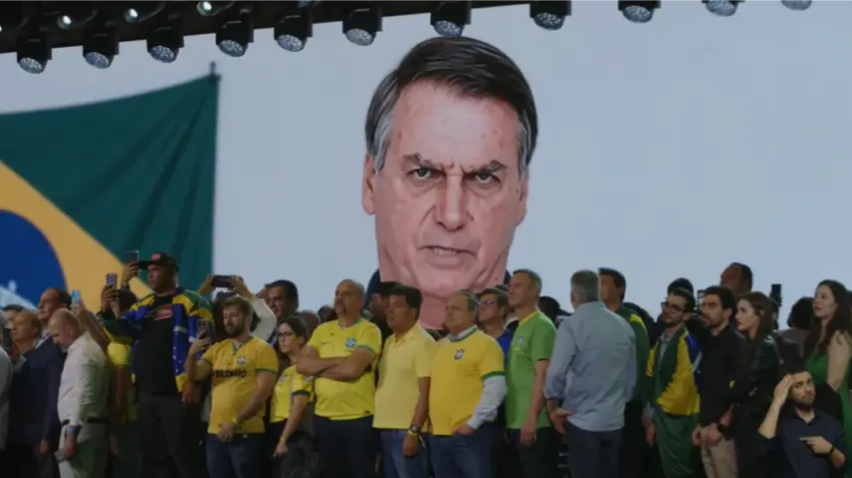
The episode raised questions over whether synthetic recreation constituted prohibited electoral propaganda. The issue was particularly sensitive because Jair Bolsonaro is ineligible for public office, is serving a 27-year-and-three-month sentence related to the attempted coup following the 2022 election and is currently under humanitarian house arrest. Separate judicial restrictions also prohibit him from using the internet, including through third parties.
On September 1, the TSE rejected a request to fine Flávio Bolsonaro over the video. By four votes to three, the Court concluded that transmitting the party convention online did not, by itself, transform the message into prohibited early electoral propaganda. The decision emphasized that content, language, intended audience, and context must be considered when determining the electoral character of a communication. The case became an important precedent for how Brazil’s electoral framework applies to AI-generated political likenesses.
From Rulemaking to Enforcement
Brazil entered the campaign with an extensive regulatory framework for artificial intelligence, but the central issue has shifted from writing the rules to enforcing them. Synthetic multimedia used in electoral propaganda must disclose that it was generated or manipulated using AI or equivalent technology, while deepfakes used as electoral propaganda are prohibited. New synthetic content using the image, voice, or manifestation of a candidate or public figure also cannot be published, republished, or promoted from 72 hours before voting until 24 hours after the close of the election, even when properly labeled.
On September 1, the TSE further clarified the framework by defining a deepfake as synthetic content produced or manipulated using AI or equivalent technology with sufficient realism or plausibility to create, reproduce, or alter a person’s image, voice, or manifestation. The Court also established that the specific electoral prohibition applies when the material qualifies as electoral propaganda, preventing every use of synthetic political imagery from automatically receiving identical legal treatment.
Platform cooperation has evolved. In July, the TSE signed agreements with Meta, X, Telegram, TikTok, Kwai, LinkedIn, and Google as part of its program against electoral disinformation. By September, nine digital platforms had submitted formal compliance plans describing how they intended to mitigate risks to electoral integrity and respond to Electoral Justice orders.
The main challenge is now implementation. A UFRJ NetLab study identified cases in which TikTok’s recommendation system displayed videos from official candidate accounts despite TSE restrictions on organic algorithmic recommendation of this type of content. At the same time, Meta reported that its automated systems removed or restricted posts by politicians, officials, activists, and commentators after detecting AI-related editing. Some affected material involved editing tools with AI functions rather than conventional deepfakes. Together, these cases show the difficulty of enforcing complex rules at scale without either allowing prohibited manipulation to spread or unnecessarily removing lawful political communication.
Extremist Threats and the Legacy of January 8
Disinformation was not the only threat directed at Brazil’s democratic institutions. In August, authorities launched Operation Rede Interrompida against an extremist network accused of discussing violent actions in Brasília during the electoral period. According to the Ministry of Justice, investigators identified discussions involving possible invasions of public buildings, including sites on the Esplanade of Ministries and the Supreme Federal Court, as well as a possible bomb attack during an electoral debate. Eight suspects between the ages of 19 and 31 were investigated across five states. Authorities identified a Telegram environment with more than 600 participants and a smaller, more radicalized group where discussions reportedly advanced toward operational planning.
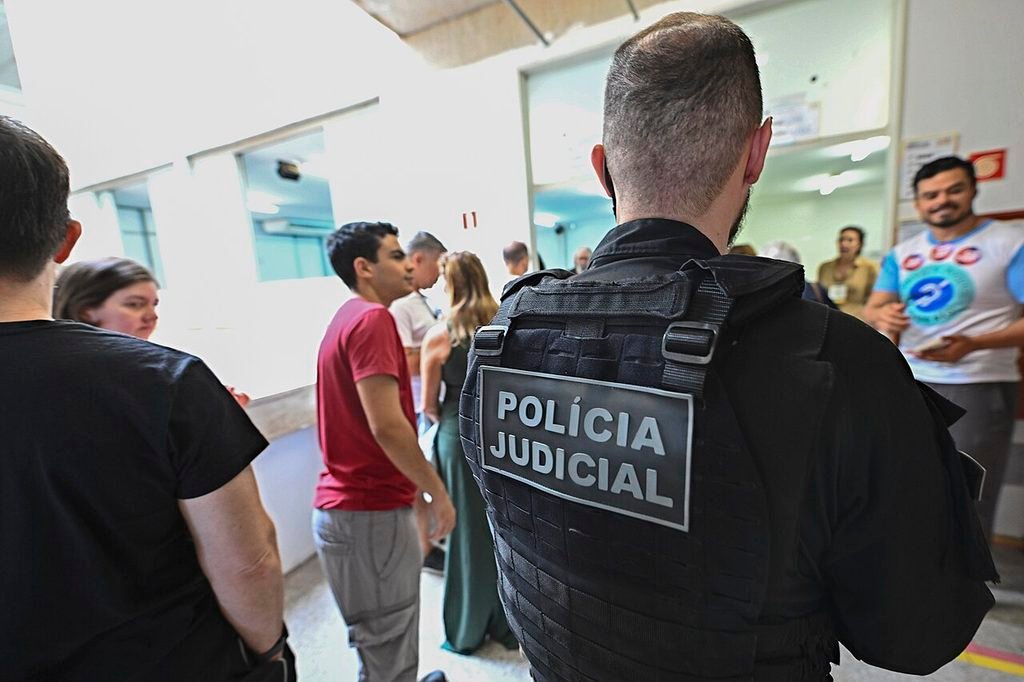
The obvious comparison is January 8, 2023, when supporters of Jair Bolsonaro who rejected the 2022 presidential election result invaded and damaged the buildings housing Brazil’s three branches of government in Brasília. According to an updated Supreme Federal Court assessment released on April 29, 2026, prosecutors had filed 1,878 complaints related to the anti-democratic acts, while the STF reported 1,402 people criminally held responsible for offenses associated with the attempted coup.
Read together, the episodes show that threats involving extra-legal action against democratic institutions did not disappear with the prosecutions that followed January 8. At the same time, the October 4 first round passed without an attack linked to the 2026 network, illustrating that extremist intent does not necessarily translate into successful action, particularly when authorities identify networks before planned acts can occur.
The First-Round Test
The first round provides evidence of how Brazil’s institutional safeguards performed under actual electoral pressure. According to the TSE, the Electoral Disinformation Alert System recorded approximately 86% fewer complaints concerning electoral integrity and possible voter suppression between August 1 and the eve of the 2026 vote than during the equivalent period in 2022, falling from 18,487 complaints to 2,604. The Court nevertheless cautioned that the decline did not eliminate the need for continued vigilance.
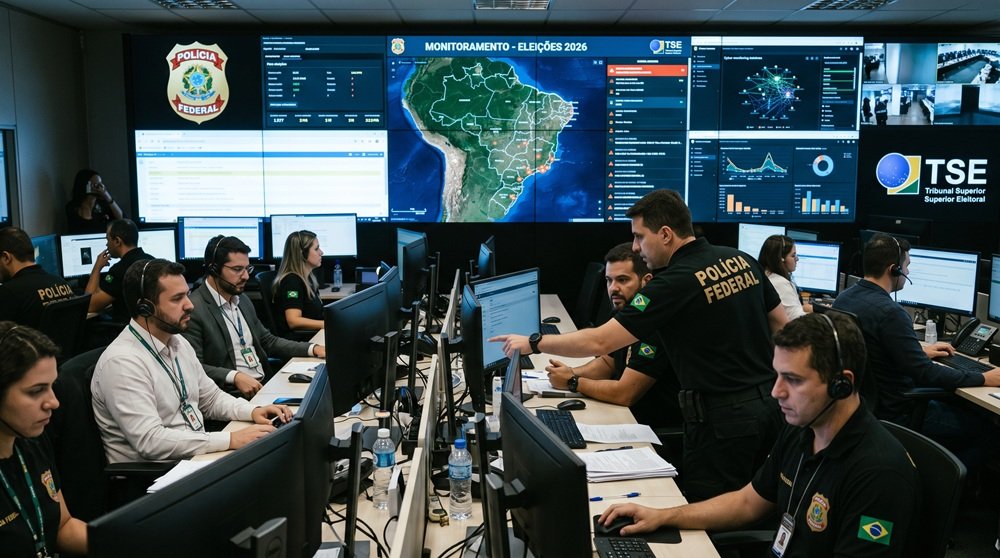
The vote-counting process also proceeded normally, although congestion affected the system responsible for publicly displaying results and temporarily delayed publication. The TSE stated that the problem was restricted to the conversion and publication of data and did not affect the actual tabulation or totalization of votes.
Conclusion
Political violence, organized crime, extremist mobilization, artificial intelligence, and platform regulation may appear to be separate security problems, but the 2026 election shows how closely they intersect. Institutions responsible for protecting candidates and voters now operate in an environment where physical threats coexist with synthetic media, algorithmic distribution, rapid online mobilization, and extremist networks capable of moving from rhetoric toward operational planning.
The shadow of the January 8, 2023 attacks in Brasília remain a critical reference point for assessing Brazil’s current political stability. While Operation Rede Interrompida demonstrated that extremist networks continue to target state institutions, the peaceful execution of the October 4 first round underscores a higher level of institutional alertness and preventive capability compared to previous cycles. More than 321,000 security personnel were deployed, and integrity-related complaints dropped significantly compared to 2022, proving that the state’s electoral and security architecture can withstand pressure. However, the democratic test is far from over. As Brazil moves toward the October 25 runoff, the central question is whether this institutional resilience can endure an intensifying political environment. The challenge for authorities is no longer just anticipating threats but ensuring that security measures and information-integrity enforcement remain balanced without suppressing legitimate political expression in a nation still negotiating the boundaries of its post-January 8 democratic safeguards.

