


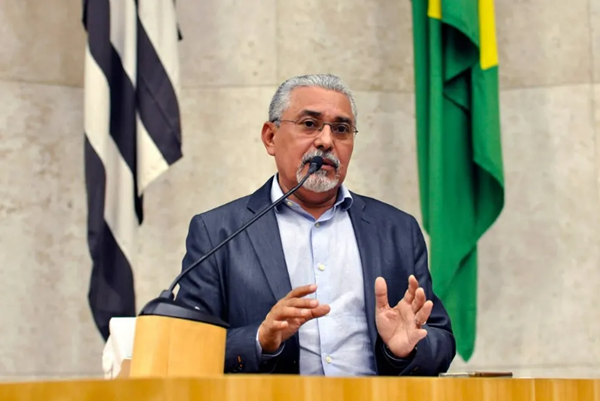
The second arrest of São Paulo City Councilor Senival Moura (PT) on October 28, 2026, and his subsequent leave of absence from the City Council have renewed scrutiny over an investigation triggered by the murder of a former bus company executive in São Paulo’s East Zone. The events center on Transunião, a municipal transit concessionaire that, according to the Civil Police and the São Paulo Public Prosecutor’s Office (MP-SP), was allegedly utilized to conceal assets and launder funds for the First Capital Command (Primeiro Comando da Capital – PCC). The inquiry has advanced along two interconnected tracks: the suspicion that a dispute over financial transfers from the company motivated the homicide, and the allegation that the councilor exercised de facto control over the concessionaire’s financial operations without appearing in its formal corporate ownership structure. Moura denies any involvement, and his legal defense maintains his innocence.
This Content Is Only For Subscribers
To unlock this content, subscribe to INTERLIRA Reports.
The Homicide That Sparked the Investigation
In March 2020, Adauto Soares Jorge, former financial director of Transunião, was fatally shot in a bakery parking lot in the Lajeado neighborhood of the East Zone. According to the Civil Police, the assassination was allegedly ordered by PCC members following the suspension of illicit payments to the faction. Investigators also began examining whether Adauto informally represented Moura’s interests within the company’s management. In June 2022, a police operation resulted in the arrest of two suspects and the seizure of 13 buses belonging to the concessionaire, which at the time operated 50 routes across two lots of the municipal transit network. In findings released in 2026, prosecutors added the allegation that a portion of the funds earmarked for the criminal faction had been diverted to illicitly finance Moura’s 2020 reelection campaign. This theory links the suspected motive behind the homicide directly to the company’s financial flows.
Allegations of Informal Control Over the Concessionaire
In June 2026, the State Department of Criminal Investigations (DEIC) and the Special Task Force to Combat Organized Crime (GAECO) arrested Moura as part of Operation Last Stop (Operação Última Parada). According to investigators, text messages extracted from seized mobile phones indicate that informal cash disbursements required his approval or direct intervention. Internal spreadsheets also allegedly identify the councilor as the beneficial owner of at least 13 buses registered under third-party nominees or the concessionaire itself. Authorities suspect that Moura influenced financial decisions and collected revenue generated by the fleet without being formally listed as a shareholder. Serving his sixth term, the lawmaker built his political base in the East Zone alongside informal transit operators and, at the time of the police operation, chaired the City Council committee responsible for reviewing and overseeing municipal transportation policies. His defense counsel has formally contested the charges.
Re-Arrest and Fallout in the City Council
Moura was released on August 5 following a ruling by the São Paulo Court of Justice (TJ-SP), which questioned the duration of his temporary detention. The Public Prosecutor’s Office appealed and secured a new arrest warrant, which was executed on October 28. The court also ordered the arrest of six additional suspects linked to Transunião. In total, the MP-SP has filed formal indictments against 21 individuals in connection with the operation, including business owners and company executives.
Analysis
The allegation of informal control over Transunião exposes a critical vulnerability in the regulatory oversight of essential public services. While corporate registries identify formal shareholders, the investigation demonstrates that examining vehicle titles, revenue destinations, and payment authorization chains is necessary to uncover who truly exercises operational influence and extracts financial benefit. Furthermore, the suspicion that a dispute over illicit payouts triggered a targeted homicide illustrates how financial infiltration by organized crime creates acute physical security risks for personnel connected to the sector.
The case underscores the necessity of cross-referencing fleet registries, corporate ownership filings, and third-party disbursements during due diligence. For corporate employers whose workforce relies on transit lines operated by the concessionaire, the most immediate risk exposure is operational: should judicial seizures or administrative interventions disrupt service, sudden route modifications or reduced bus frequencies could severely impact employee commutes and shift handovers.

