


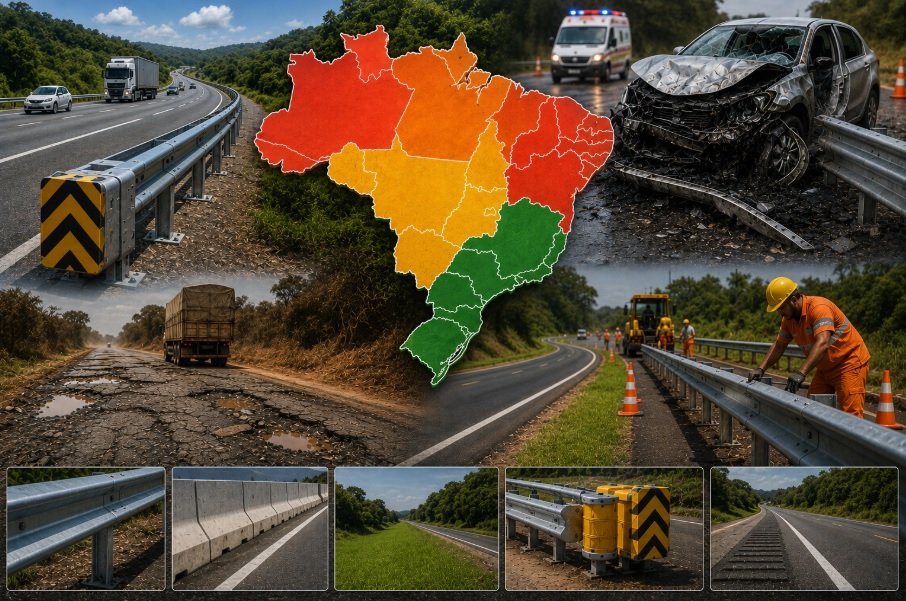
In Brazil, only two out of every ten highways offer a high level of what transportation specialists call “road forgiveness,” a measure that assesses how effectively road infrastructure can reduce the severity of accidents and protect motorists from serious injuries or fatalities. According to the 2026 CNT Highway Survey, nearly 38% of the country’s road network falls into the low-forgiveness category, indicating greater risks for drivers in the event of crashes, while roughly half of the highways analyzed present an intermediate level of safety. The study evaluated more than 114,000 kilometers of roads across the country and found significant disparities between regions and management models, with concession-operated highways generally performing better than publicly managed roads. The findings reinforce long-standing concerns about infrastructure quality, road safety standards, and the challenges faced by motorists traveling on large portions of Brazil’s highway network.
This Content Is Only For Subscribers
To unlock this content, subscribe to INTERLIRA Reports.
Methodology
The National Confederation of Transport (CNT) evaluated more than 114,000 kilometers of highways across Brazil in its 2025 Highway Survey, using a metric known as the Highway Forgiveness Index. The concept is based on an internationally recognized methodology that measures how effectively road infrastructure can reduce the severity of traffic accidents. In practical terms, a “forgiving road” is one whose design and safety features help minimize the consequences of driver errors or collisions. The assessment considers factors such as guardrails, safety barriers, roadside clear zones, impact attenuators, approaches, and other passive safety elements. The better the infrastructure’s ability to protect motorists during accidents, the higher the level of forgiveness assigned to the highway.
Data
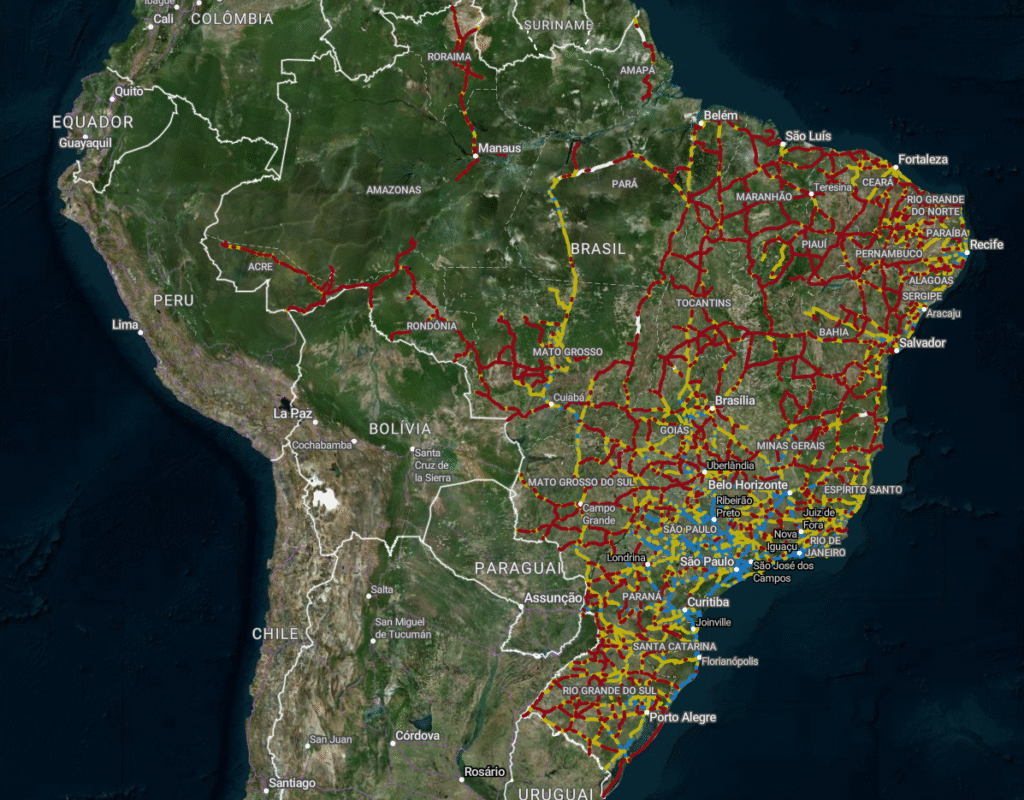
According to the survey, only 19.9% of the road network evaluated—equivalent to 22,694 kilometers—was classified as having a high level of forgiveness. Another 42.7% (48,733 kilometers) fell into the medium-risk category, while 37.5% (44,770 kilometers) were classified as having low forgiveness, indicating a greater potential for serious consequences in the event of an accident. Compared to the 2024 survey, there was a slight decline of 0.4 percentage points in the share of highways rated as highly forgiving, while the proportion of roads in the intermediate category increased by 0.9 percentage points.
São Paulo
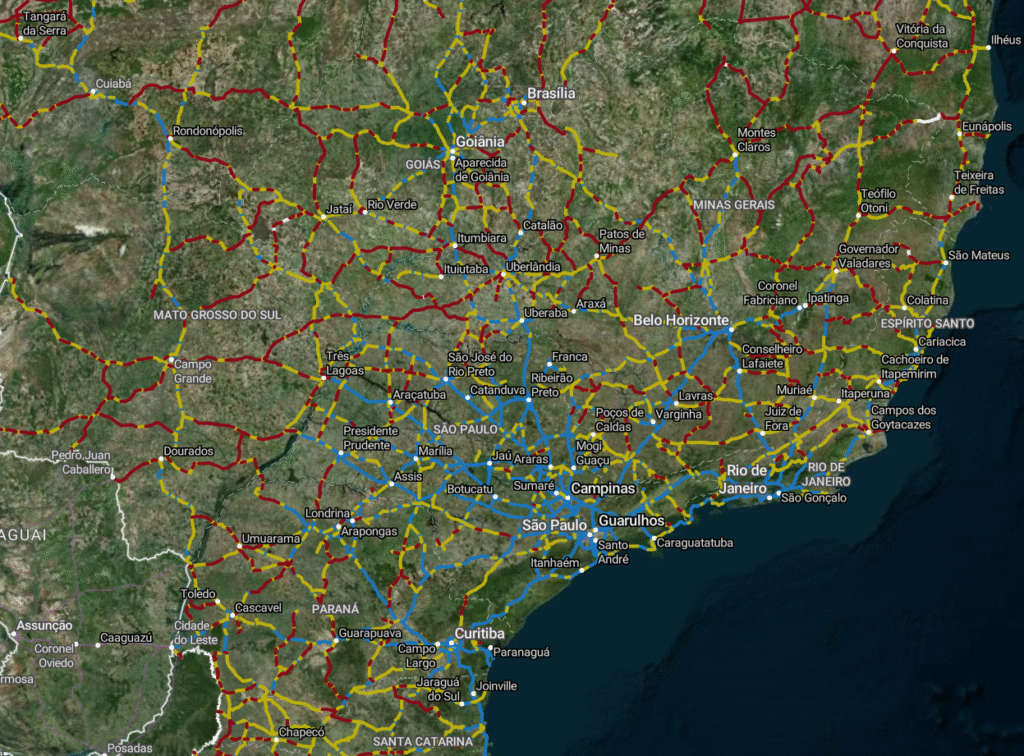
São Paulo recorded the safest highway network in the country. Of the nearly 11,000 kilometers of roads assessed in the state, approximately 70% achieved a high safety standard, while only 518 kilometers were classified as having a high level of risk. Among the 106 highways analyzed in São Paulo, only two were included in the lowest safety category: SP-613 (Arlindo Béttio Highway), located in the Presidente Prudente region, and SPA-074, an access road in the Araraquara region. Both are managed by the state’s Department of Highways (DER). Within the São Paulo network, 28 highways received the highest classification, represented by the blue index. Among them, SP-091, the Francisco Von Zuben Highway, also known as the Campinas–Valinhos corridor, was the only publicly managed road to achieve this distinction.
Other States
The survey also revealed significant regional disparities. States such as Amapá and Roraima did not record a single kilometer in the highest-rated category. The largest proportions of highways with low forgiveness levels were found in Amazonas (74.7%) and Maranhão (74.3%). In Amazonas, only 989 kilometers of roads were evaluated—less than one-tenth of the total assessed in São Paulo—while Maranhão accounted for 4,724 kilometers. High-forgiveness road segments are concentrated primarily in the Southeast and South regions, where privately operated concessions are more common. In contrast, the North, Northeast, and Central-West regions contain a greater number of corridors classified as medium or low forgiveness, including important routes used for freight and passenger transportation. The survey also identified challenging conditions in Minas Gerais, where eight of the 85 highways evaluated received a 100% low-forgiveness rating. All of these roads are publicly managed by either state or federal authorities.
Public Highways
The study found a clear difference between privately operated and publicly managed highways. Among concession-operated roads, 62% (18,670 kilometers) were classified as having a high level of forgiveness, while only 2.4% (718 kilometers) fell into the highest-risk category. Public highways presented a markedly different picture. Approximately half of the publicly managed network—42,052 kilometers—was classified as having a low level of safety, while only 4.8% (4,024 kilometers) achieved a high-forgiveness rating. The percentage of public roads with a high level of forgiveness declined from 6.2% in 2024 to 4.8% in 2025. Meanwhile, concession-operated highways maintained significantly stronger performance, reinforcing the gap in infrastructure quality and safety standards between the two management models.
Analysis:
Brazil’s highway safety data reveals that infrastructure quality remains one of the country’s most significant transportation challenges. The concept of road forgiveness is particularly important because it measures not only the likelihood of accidents but also the capacity of highways to reduce their consequences when crashes occur. The fact that nearly four out of every ten kilometers evaluated were classified as having low forgiveness suggests that a substantial portion of the national road network still lacks essential passive safety features capable of preventing fatalities and serious injuries. This reality helps explain why traffic accidents continue to generate considerable social and economic costs despite advances in vehicle technology and traffic enforcement.
Sources: A Folha de SP.

