


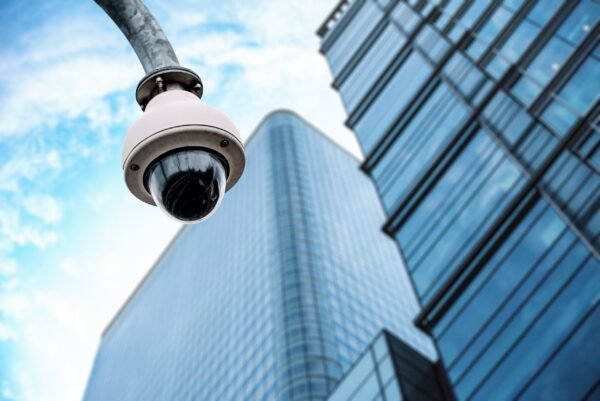
A survey conducted by the Intelligence, Surveillance and Technology Support Center for Public Security (Civitas), operated by the Rio de Janeiro city government, indicates that one in every five vehicles monitored in the city shows signs of being cloned. One of Civitas’s main tools is the so-called Electronic Surveillance System, which tracks license plates circulating throughout the capital in real time. Police and judicial authorities can request that specific license plates be added to the monitoring system. Once registered, the city’s network of approximately 12,000 cameras distributed across Rio de Janeiro begins searching for the vehicle automatically.
This Content Is Only For Subscribers
To unlock this content, subscribe to INTERLIRA Reports.
Electronic Surveillance System
To identify possible cloned vehicles, the Electronic Surveillance System relies on data analysis and physics-based calculations. If the same license plate is detected in two different locations within a time interval that would require the vehicle to travel at an average speed exceeding 110 km/h, the system automatically generates an alert indicating possible cloning. The information is then forwarded to the authority responsible for the investigation. So far, 573 vehicles have been identified under these circumstances and, according to Civitas, every vehicle or motorcycle stopped after an alert resulted in the confirmation of some type of criminal activity. Currently, 321 vehicles remain under active monitoring by the system.
Cross-Referencing Information
Davi Carreiro, CEO of Civitas, explained that the initiative focuses on surveillance and support for criminal investigations. According to him, the value of the system lies not only in the images captured by cameras, but mainly in the large-scale data analysis generated from those recordings. On an average weekday, the Civitas system reads up to ten million license plates across Rio de Janeiro. Whenever one of the monitored vehicles is identified, two alerts are issued simultaneously: an audible notification inside the Central Control Center, and a second alert is sent directly to the authority in charge of the case, such as a police investigator or intelligence unit.
Pharmacy Robbery
The 15th Police Precinct (Gávea) used the system to identify the modus operandi of a gang that used cloned vehicles to flee after robberies targeting pharmacies in Rio’s South Zone. In one of the crimes, committed in January, the group reportedly took employees hostage while stealing weight-loss injection pens. After investigators identified the suspect vehicle’s license plate, it was inserted into the Electronic Surveillance System on May 15. The system generated 451 alerts, allowing police to map the vehicle’s circulation patterns, generally concentrated in the afternoons and in neighborhoods of the South Zone. In one instance, the same plate appeared almost simultaneously in Lagoa Rodrigo de Freitas and Praia de Botafogo, triggering a cloning alert because the route would have required an average speed of 165 km/h. On May 21, the system detected the vehicle again in Botafogo and began issuing audible warnings. Minutes later, the driver, Jader Aquino de Souza, who was considered a fugitive, was arrested on Rua Voluntários da Pátria.
Intercepted Vehicle
Another investigation, conducted by the 18th Police Precinct (Praça da Bandeira), led the Electronic Surveillance System to identify license plates linked to vehicles allegedly used by the Third Pure Command (TCP). Investigators suspect the cars were transporting drugs and weapons between communities in Rio’s North Zone, including Complexo de Israel, Complexo da Maré, and Morro do Dendê. Around 11:00 on May 5, police received an alert that one of the monitored vehicles was traveling along Estrada do Galeão, on Ilha do Governador. The vehicle was intercepted, and the driver, Patrick Mateus Del Pupo, was arrested in the act.
Partnerships with the Police
Vehicle monitoring is only one branch of Civitas’s operations. In an investigation into vehicle thefts in Cidade Universitária, the 37th Police Precinct (Ilha do Governador) requested support in identifying suspects responsible for stealing vehicles later dismantled in the Baixada Fluminense region. Civitas technicians developed a system capable of identifying vehicles that repeatedly appeared near crime scenes at the same times the thefts occurred. During one operation triggered by an alert from the Electronic Surveillance System, police officers arrived as two suspects were attempting to steal another car. One of the men initially admitted involvement in only one previous theft, but investigators later linked him to at least 16 additional cases. According to police, the technology has also proven effective in identifying support vehicles used during criminal actions.
More Cameras
The Rio de Janeiro city government plans to double the number of smart surveillance cameras over the next two years, increasing the network to approximately 25,000 devices. Authorities are also testing artificial intelligence systems capable of automatically describing elements captured in images using characteristics such as “man,” “backpack,” or “long sleeves.” According to Civitas, during testing conducted last month, the new system successfully identified and categorized 1.6 million objects with an accuracy rate of 88% at the highest confidence level.
Analysis:
The expansion of Rio de Janeiro’s Electronic Surveillance System reflects a broader transformation in urban policing, in which large-scale data analysis and real-time monitoring increasingly become central tools in combating organized crime. The fact that one in every five monitored vehicles shows indications of cloning demonstrates both the scale of document fraud involving automobiles and the sophistication of criminal logistics operating in the city. Vehicle cloning has become particularly attractive for criminal groups because it allows them to circulate through highly monitored regions while complicating police identification efforts. By combining license plate recognition with movement analysis and speed calculations, the system creates a layer of predictive intelligence capable of identifying anomalies that would be almost impossible to detect through traditional patrol methods.
At the same time, the expansion of surveillance infrastructure and the incorporation of artificial intelligence raise important institutional and legal challenges. While this may improve investigative efficiency and response capacity, it also intensifies debates surrounding privacy, data governance, oversight mechanisms, and the limits of state surveillance in public spaces.
Sources: O Globo.

