


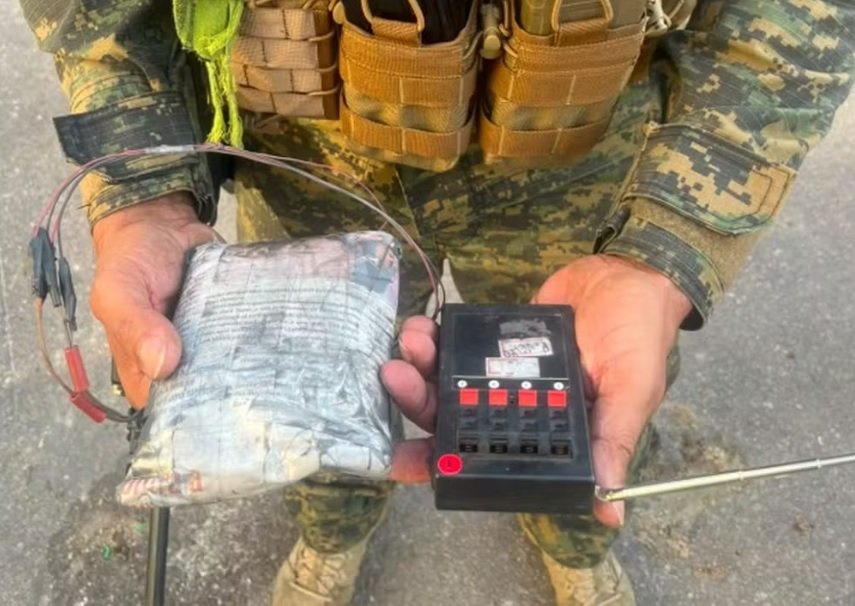
On Friday (21/08), the Military Police identified—for the first time—the use of car bombs by drug traffickers during an operation in the Complexo de Israel, in Rio de Janeiro’s North Zone. Explosive-rigged barricades were also found at the site. According to the force, the devices were designed to be triggered remotely as security forces approached. The area is controlled by the “Terceiro Comando Puro” (TCP) gang.
This Content Is Only For Subscribers
To unlock this content, subscribe to INTERLIRA Reports.
How They Work
The explosive device operates via remote detonation. It consists of a detonating component—using a detonating cord to trigger the charge—and the explosive material itself. C4 is typically used, though homemade versions may employ gunpowder. Shrapnel—such as nails, screws, and metal scraps—is placed around the explosive core to be propelled outward when the charge detonates.
Placement
The devices were positioned at various points throughout the Complexo de Israel. They may have been placed to inflict casualties on anyone attempting to remove the barricade or to damage armored vehicles. They are incendiary and can also spray shrapnel, injuring nearby individuals. According to the Military Police, their effect differs from that of dynamite; while the exact blast radius is difficult to pinpoint, the estimated range is approximately 10 meters—enough to injure bystanders and damage police vehicles. The closer the proximity, the greater the damage.
Precedent
In September of 2025, two military police officers were injured by an explosive-rigged barricade while patrolling the Barbante community on Ilha do Governador, in the city’s North Zone. The devices had been planted beneath traffic cones as booby traps. On that occasion, the officers were struck by shrapnel, and a patrol car was damaged.
Context
Early this Friday, the Rio de Janeiro Military Police launched an operation in the Cidade Alta, Cinco Bocas, and Pica-pau communities—an area controlled by the Terceiro Comando Puro (TCP). Intense gunfire broke out upon the teams’ arrival. A bus driver was struck by a stray bullet. According to the force, one suspect was killed. Due to the clash, Avenida Brasil and the Washington Luiz Highway were temporarily closed to traffic as a safety precaution. The driver who was shot, Douglas Santos de Souza, was hit in the shoulder while on his way to work.
Analysis:
This incident marks a significant escalation in urban warfare tactics, as the Terceiro Comando Puro (TCP) has now deployed remotely detonated car bombs and explosive-laden barricades—methods previously unseen in routine police operations in the city. The use of explosives and shrapnel-enhanced devices, with an estimated lethal radius of 10 meters, indicates a strategic shift toward countering armored vehicles and inflicting maximum casualties on security forces. Crucially, the clashes occurred near Avenida Brasil, one of Rio’s main arterial highways, which was temporarily closed—disrupting freight flow, commuter traffic, and emergency response routes, highlighting the operational risk to corporate logistics and employee mobility.
From a corporate security perspective, this evolution demands immediate reassessment of travel risk protocols for personnel operating in or transiting the North Zone, especially during peak hours when Avenida Brasil serves as a critical corridor. The precedent of shrapnel injuries to officers in 2025, now replicated with larger-scale devices, confirms that gangs are adapting asymmetrically, potentially targeting not only police but also civilian infrastructure near conflict zones. Companies should implement real-time monitoring of police operations, avoid routes adjacent to favela entrances during high-tension periods, and coordinate with local security liaisons to update emergency evacuation plans, as the unpredictability of these new explosives raises the stakes for collateral damage to nearby commercial and residential areas.

