


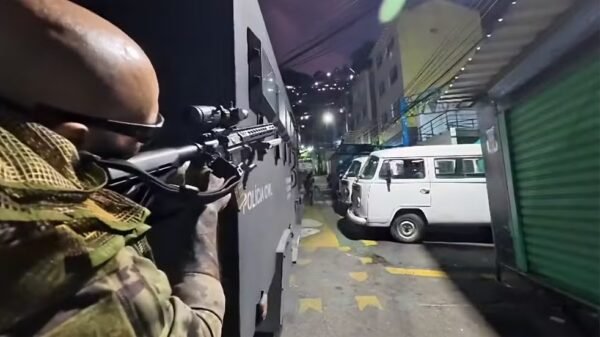
Of the 2,511 shootings recorded during the first half of this year across the metropolitan areas of Rio de Janeiro, Recife, Salvador, and Belém, security forces were involved in 39%. According to a report released by the Fogo Cruzado Institute, the figure points to an increase in police involvement in armed incidents. To compile the data, the institute combines crowdsourced reports submitted through a mobile application, which are verified in real time, with information from an open database on armed violence. During the same period last year, police involvement in shootings stood at 33%.
This Content Is Only For Subscribers
To unlock this content, subscribe to INTERLIRA Reports.
First Six Months
In total, 2,403 people were shot during the first six months of the year across the 57 municipalities covered by the monitoring system. Of these victims, 1,628 were killed, and 775 were wounded. A total of 901 people were shot during police actions, while security forces were involved in 989 shooting incidents.
Salvador
Salvador and its metropolitan area recorded particularly high levels of police involvement in shootings: 56% of the 656 incidents recorded involved police actions, a higher proportion than in Rio (47%), Belém (45%), or Recife (9%). Of the 637 people shot in Bahia’s capital and surrounding municipalities, 340 were struck during police actions. In addition, 93% of the 14 incidents involving multiple fatalities, classified by the study as “mass killings,” occurred during police operations and resulted in 49 deaths. The neighborhoods of Nordeste de Amaralina and Pirajá accounted for 37% of the deaths recorded in these police-involved mass killings. Across the four metropolitan areas, the number of people shot during factional disputes increased by 12%, from 181 to 203, while the number of victims shot during robberies rose by 9%, from 239 to 260.
Record in Rio
Greater Rio recorded 976 shootings during the period. Police were involved in 47% of these incidents, the highest proportion recorded for the first six months of a year since 2017. Regarding clashes between armed groups, although the number of shootings fell by 35%, the number of casualties reached the highest level in the historical series, with 144 people shot, representing a 78% increase. Another 147 people were shot during robberies or attempted robberies, a 40% increase and the highest figure recorded in the past four years. The municipality of Rio de Janeiro accounted for 64% of all shootings in the metropolitan area. Maré recorded the highest number of incidents among neighborhoods, while Taquara had the largest number of people shot, with 29 victims.
Recife
Recife recorded its lowest number of shootings since 2019, with 645 incidents, representing a 12% decline. However, the metropolitan area also registered the highest number of shootings involving police operations in the historical series, with 60 cases, an increase of 88%. The number of people shot during robberies also rose sharply, increasing by 89% compared with the period from January to June 2025. With 53 victims, the figure was also the highest recorded for the first half of the year over the previous four years.
Belém: Record Number of Shootings in Homes
In Belém, the 234 shootings recorded during the period represented a 20% decline, although police operations still accounted for 45% of all incidents. Armed violence also increasingly affected residential spaces, reaching a record level: 59 people were shot while inside their homes. This figure was 90% higher than that recorded during the first half of 2025 and was equal to the total number of such cases registered throughout the entire year of 2025. Police actions and operations accounted for 76% of the shootings that occurred inside homes.
Analysis:
The data from the first half of 2026 points to a significant change in the profile of armed violence across Brazil’s major metropolitan areas: police operations are becoming an increasingly important component of shooting incidents. Security forces were involved in 39% of the 2,511 shootings recorded in Rio de Janeiro, Recife, Salvador, and Belém, compared with 33% during the same period in 2025. This does not necessarily indicate that police actions are causing a broader increase in violence, since operations are frequently concentrated in areas already affected by armed criminal groups. However, the growing proportion of shootings involving security forces raises important questions about the intensity of police confrontations, operational strategies, and the conditions under which armed interventions are taking place.
Source: A Folha de SP.

