

Online scams have become increasingly common, demanding greater attention to the links and online content we interact with daily. Cybercriminals are constantly creating new methods to deceive people for financial gain, ranging from falsified payment receipts to fake technician impersonations. In Brazil, around 71% of the population has already fallen victim to this type of crime, which shows the need for caution when clicking on links in WhatsApp messages, emails, or SMS, as well as avoiding sharing personal information with strangers. To reduce risks, it is essential to understand how these scams work, recognize their main types, learn what to do if you are targeted, and adopt preventive measures to protect your data and avoid financial losses.
This article is part of a series on digital security. You can read the other texts here.
This Content Is Only For Subscribers
To unlock this content, subscribe to INTERLIRA Reports.
Fake Return Scam
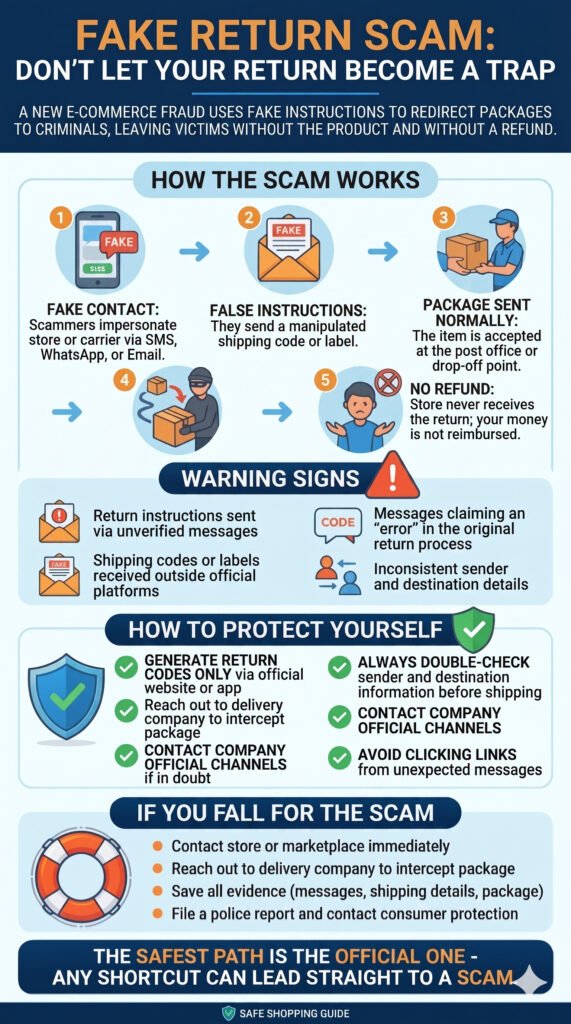
Returning a product should be simple… but scammers have found a way to turn this process into a trap. A new e-commerce fraud uses fake return instructions to redirect packages to criminals, leaving victims without the product and without a refund.
Looks like a normal return… but it isn’t
After requesting a return, you receive a message—via WhatsApp, SMS, or email—pretending to be from the store, a carrier, or postal service. It includes shipping code or label and clear instructions. Everything seems legitimate. That’s exactly the trick.
How the scam works
The scheme is carefully designed to mimic real return procedures:
- Fake contact: Scammers impersonate the store or delivery company
- False instructions: They send a manipulated shipping code or label
- Package sent normally: The item is accepted at the post office or drop-off point
- Redirected delivery: The package is routed to an address controlled by criminals
- No refund: The company never receives the return, so your money is not reimbursed
In the end, the victim loses both the product and the refund.
Warning signs to watch for
- Return instructions sent via unverified messages
- Shipping codes or labels received outside official platforms
- Messages claiming there was an “error” in the original return process
- Inconsistent or unclear sender and destination details
How to protect yourself
A few simple checks can prevent major losses:
- Generate return codes only through the official website or app
- Never trust labels or QR Codes sent via WhatsApp, SMS, or email without verification
- Always double-check sender and destination information before shipping
- If in doubt, contact the company through official channels only
- Avoid clicking on links from unexpected messages
If you fall for the scam
Act quickly to minimize damage:
- Contact the store or marketplace immediately
- Reach out to the delivery company to try to intercept the package
- Save all evidence (messages, emails, shipping receipts)
- File a police report and contact consumer protection agencies
Final tip
When returning a product, the safest path is the official one—any shortcut can lead straight to a scam.