

Online scams have become increasingly common, demanding greater attention to the links and online content we interact with daily. Cybercriminals are constantly creating new methods to deceive people for financial gain, ranging from falsified payment receipts to fake technician impersonations. In Brazil, around 71% of the population has already fallen victim to this type of crime, which shows the need for caution when clicking on links in WhatsApp messages, emails, or SMS, as well as avoiding sharing personal information with strangers. To reduce risks, it is essential to understand how these scams work, recognize their main types, learn what to do if you are targeted, and adopt preventive measures to protect your data and avoid financial losses.
This article is part of a series on digital security. You can read the other texts here.
This Content Is Only For Subscribers
To unlock this content, subscribe to INTERLIRA Reports.
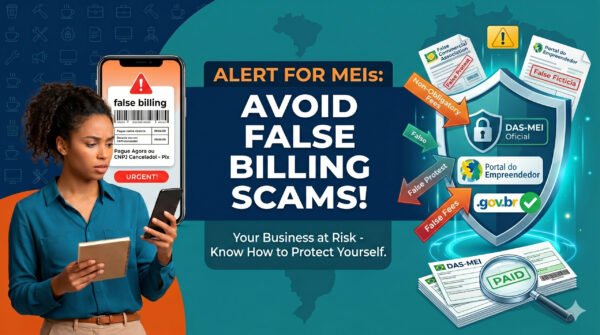
False Billing Scam Targeting MEIs
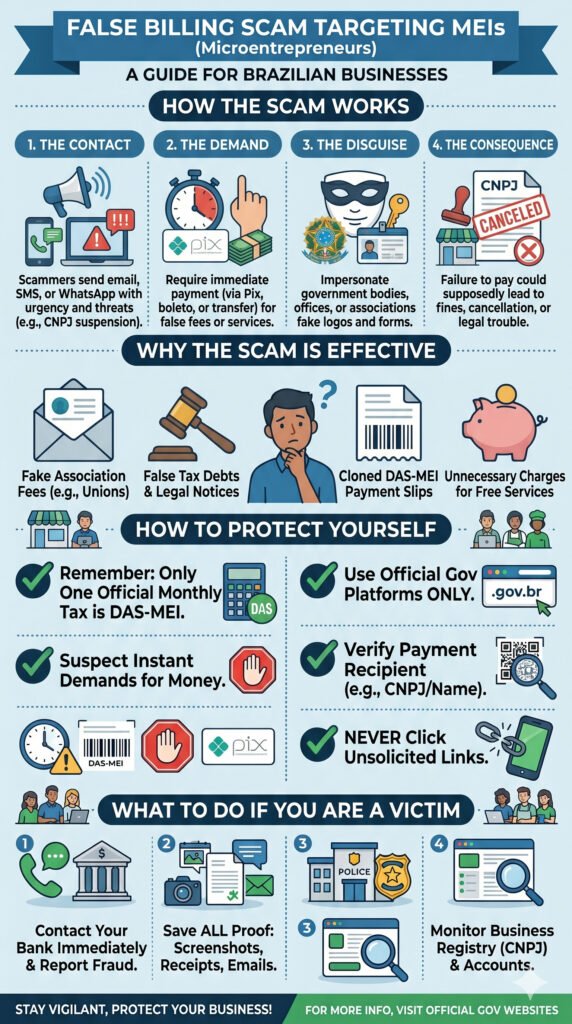
Microentrepreneurs (MEIs) across Brazil have increasingly become targets of fraudsters who send fake bills, payment requests, and threats of CNPJ cancellation. By impersonating government agencies, trade associations, notary offices, or tax authorities, criminals pressure business owners into making unnecessary payments for services or debts that do not exist. These scams exploit fear, urgency, and confusion about legal and tax obligations, leading many victims to pay before verifying the authenticity of the charge.
How the Scam Works
Fraudsters typically contact MEIs through email, SMS, WhatsApp messages, letters, or fake websites. The communication often claims that the business has an outstanding debt, a registration problem, or is at risk of fines, protest actions, or CNPJ suspension.
Common variations include:
- Fake membership fees from business associations or unions.
- False notices of tax debts or legal collection actions.
- Cloned DAS-MEI payment slips directing funds to criminals.
- Charges for business registration, data updates, or MEI formalization services that are actually free through official government channels.
The messages usually create a sense of urgency, encouraging immediate payment through Pix, boleto, or bank transfer.
Why the Scam Is Effective
Many small business owners are unfamiliar with all administrative requirements related to their business registration. Criminals take advantage of this uncertainty by using official-looking documents, legal terminology, government logos, and professional websites that appear legitimate. Fear of losing the CNPJ, facing legal consequences, or becoming non-compliant often leads victims to act quickly without verifying the information.
How to Protect Yourself
MEIs can reduce their risk by following a few basic precautions:
- Remember that the primary monthly tax obligation is the official DAS-MEI payment.
- Generate tax guides only through official government platforms.
- Be suspicious of messages demanding immediate payment.
- Verify that government websites end with “.gov.br”.
- Check the payment recipient before completing any transaction.
- Avoid clicking links received through unsolicited emails, SMS messages, or WhatsApp conversations.
What to Do if You Become a Victim
If you have already made a payment:
- Contact your bank immediately and report the fraud.
- Save screenshots, payment receipts, emails, and messages.
- File a police report.
- Monitor your business registration and financial accounts for suspicious activity.