


On Friday afternoon (02/01), an attack on an armored truck forced the closure of the Luiz de Queiroz Highway (SP-304), between Piracicaba and Americana, in the interior of São Paulo. The action was attributed to a highly organized and specialized criminal gang and displayed clear characteristics of the “new cangaço,” a term used to describe coordinated assaults carried out with military-style tactics, heavy weapons, and territorial control to prevent police intervention.
This Content Is Only For Subscribers
To unlock this content, subscribe to INTERLIRA Reports.
Heavy Weaponry
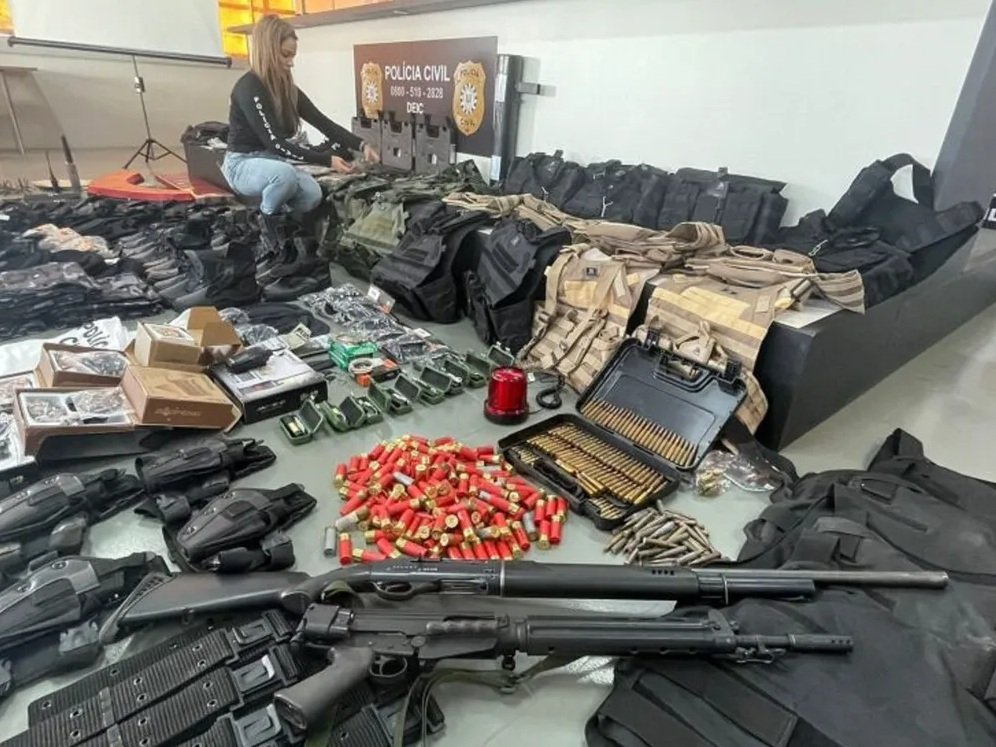
According to preliminary information from the police, between 10 and 12 criminals took part in the attack. The group was heavily armed, using rifles and other high-caliber weapons, and deliberately spread tire-puncturing devices along the highway to block access by police forces and damage vehicles attempting to pass through the area. At least four vehicles were used in the operation. One of them had been modified with a structure known as a “puncture device,” an opening at the rear of the car that allows a rifle to be mounted and fired from inside the vehicle, increasing protection for the shooters during the assault.
Use of Explosives
After intercepting the armored truck, the attackers used explosives in an attempt to breach the vehicle’s safety. The blast caused the truck to overturn on the side of the highway and subsequently catch fire. Videos and images recorded by witnesses show intense flames, thick smoke, and debris scattered across the road. Despite the violence of the attack, the security guards responsible for escorting the armored vehicle were not injured and managed to seek safety.
Road Blockage
The Military Police and the Civil Police were immediately called to the scene and established a security perimeter to isolate the area. There is still no official confirmation as to whether the criminals succeeded in stealing any money from the armored truck. Forensic teams were deployed to collect evidence, including remnants of explosives and shell casings. The attack led to partial closure of the highway and caused significant traffic congestion. The presence of tire-puncturing traps on the asphalt delayed the reopening of the road, as specialized teams were required to remove them safely. Searches for the suspects remain ongoing in the Piracicaba and Capivari regions.
Military Police
In a statement, the Military Police said that teams remain deployed in the area and are “providing support to the security guards and carrying out searches through the BAEP,” the elite battalion specialized in high-risk operations, with the support of a police helicopter. According to the corporation, all access roads in the region are being closely monitored through intensified patrols and the use of surveillance technology in an effort to locate and apprehend those responsible for the attack.
Analysis:
The attack on the armored truck along the SP-304 reflects the consolidation of the “new cangaço” as a persistent and adaptive threat in Brazil’s interior. The level of planning, the use of heavy weaponry, and the deliberate neutralization of access routes indicate a criminal structure with access to intelligence, logistics, and specialized training. These operations are not opportunistic robberies, but complex, time-sensitive assaults designed to overwhelm local response capacity and exploit gaps between municipal, state, and federal enforcement coverage.
From a policy perspective, incidents like this expose the need for a more integrated security approach in highway and interior regions. Reliance on reactive elite units, such as BAEP, while essential in containment, does not address the intelligence gaps that allow these groups to mobilize undetected.

