


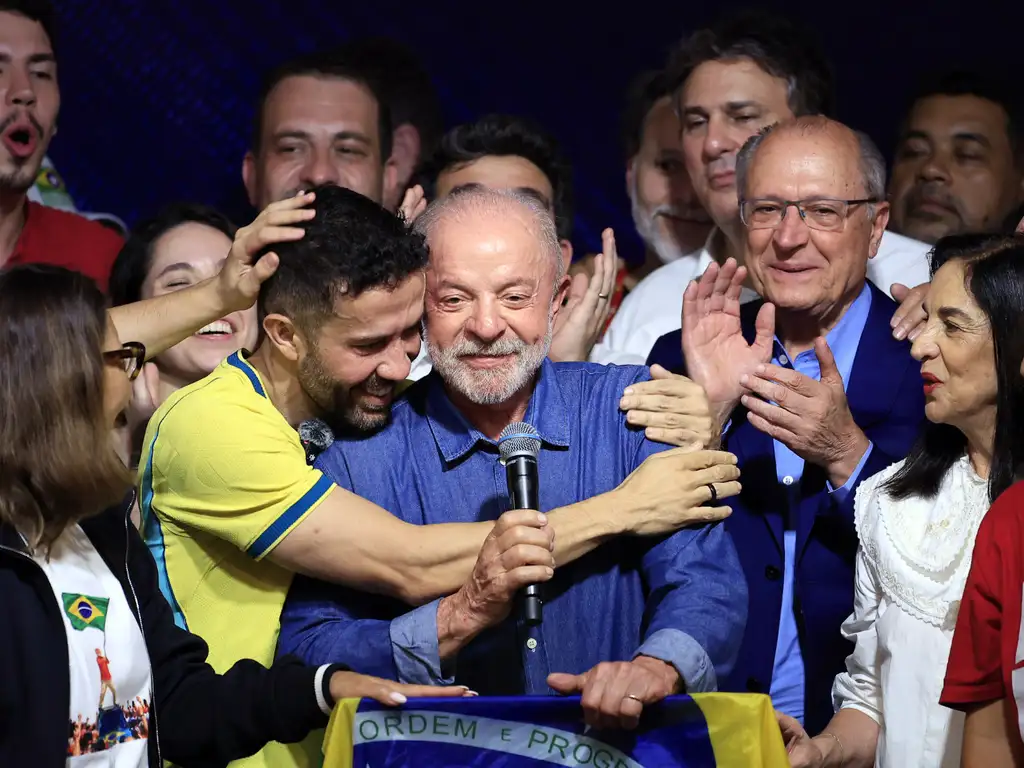
Brazil concluded one of its closest presidential elections since redemocratization on Sunday (25/10), with President Luiz Inácio Lula da Silva (PT) defeating Senator Flávio Bolsonaro (PL) with 51.79% of valid votes and securing an unprecedented fourth term. Flávio nevertheless obtained almost 60 million votes, the strongest result ever achieved by a PT opponent, confirming the continued electoral strength of the Bolsonaro-aligned right. The final week was marked by judicial intervention, disputes involving social-media platforms, allegations surrounding both campaigns, last-minute government measures, suspected transport problems and an unprecedented extension of voting until 19h. Lula now enters another term facing fiscal constraints, a more conservative Congress and pressure for economic adjustment, while Flávio’s defeat accelerates the dispute over the future leadership of Bolsonarismo.
This Content Is Only For Subscribers
To unlock this content, subscribe to INTERLIRA Reports.
The Election Results
Lula reversed the first-round result and won the runoff with 51.79% of valid votes. More than 128 million voters participated, while abstention fell to 19.21%, compared with 21.08% in the first round. Flávio’s almost 60 million votes nevertheless represented the best performance ever by a presidential candidate running against the PT.
Lula will take office on January 5, 2027, at age 81, becoming the oldest president to assume office in Brazilian history. The articles also present the election as likely to be his final presidential contest, increasing pressure on the PT to prepare a post-Lula succession.
Justice and the Electoral Process
The judiciary played a central role throughout the final stage of the campaign. Lula’s campaign announced an Electoral Judicial Investigation Action seeking the cancellation of Flávio’s ticket over alleged “algorithmic manipulation” by Meta, accusing the company of unequal treatment and improper use of media. Meta denied intentionally favoring Flávio and attributed the reported problems to technical failures.
The election was highly judicialized. TSE president Kassio Nunes Marques reported 2,265 original proceedings during the electoral period, including 827 representations and 446 requests for right of reply.
On election day, STF Justice Cristiano Zanin extended voting nationwide from 17h to 19h, after reports of transport failures and weather-related access problems. Lula’s campaign initially requested more time because of insufficient buses in Salvador and parts of São Paulo, while Flávio’s campaign later requested extensions in municipalities affected by heavy rain, flooding, and blocked roads. Kassio later said the extension did not alter the election result.
Social Networks and the Electoral Dispute
Social-media algorithms became one of the most controversial issues of the runoff. Internal Meta communications cited in the articles indicated restrictions affecting Lula’s accounts while Flávio and pro-Flávio channels received greater recommendation exposure on Instagram and WhatsApp. Lula’s campaign used the issue in its legal action, while Meta denied deliberate interference.
Meta’s independent Oversight Board also identified recurring problems in electoral content moderation, including both excessive restrictions on legitimate political expression and insufficient enforcement capable of affecting election integrity. The controversy highlighted the increasingly important role of digital platforms and influential online figures such as Nikolas Ferreira and Andre Janones in Brazilian politics.
Final Debate and New Allegations
The final Globo debate on Friday (23/10) was marked by personal attacks and disputes over corruption, public security and the economy. Flávio emphasized inflation, interest rates, public debt and the cost of living, while Lula defended his social and economic record. Flávio referred to Lula as “nine fingers,” later apologizing, while Lula called him a “militiaman.”
The candidates also disputed the release of bank, fiscal, and telephone records. Lula offered to disclose his own information and that of close relatives and family-linked companies if Flávio did the same. Flávio conditioned his participation on Lula also releasing information linked to former presidential aide Marco Aurélio Santana Ribeiro, known as Marcola.
Lula connected the issue to investigations involving lawyer Willer Tomaz, a friend of Flávio suspected of money laundering connected to the INSS fraud case. According to the articles, Flávio had operational access to a bank account associated with Tomaz’s offshore company Alcazar Holdings; both denied sharing the account or involvement in wrongdoing. Lula also questioned Flávio’s relationship with former Banco Master owner Daniel Vorcaro.
Another report alleged that Flávio attended a boat party in Brasília in 2020 with lobbyists and prostitutes. The event was reportedly organized by businessmen linked to Precisa Medicamentos, which later participated in Covaxin negotiations during the Bolsonaro government.
Security and Operational Incidents
Several cases of political violence were reported throughout Brazil, a result of a highly confrontational political environment. Besides, a LATAM flight from Belo Horizonte to Congonhas was cancelled after employees found a letter containing threats of an attack and a bomb. More than 170 passengers were affected. Federal Police inspections found no explosives or evidence justifying arrests.
Last-Minute Measures
Government measures announced or implemented shortly before the runoff became another major controversy. Bolsa Família payments were brought forward so beneficiaries received the October installment before the second round, while the minimum benefit increased from R$600 to R$691. The government said the accelerated schedule responded to expected El Niño effects and was unrelated to the election.
These measures formed part of a wider policy package that included fuel subsidies and tax relief, new credit lines, incentives for home and vehicle purchases, expansion of Pé-de-Meia, forgiveness of some MEI debts and a proposal for free public transportation on weekends.
Transport Problems and Extended Voting
Election day was affected by significant public-transport failures, particularly in Salvador and São Paulo. The TSE acknowledged problems and ordered investigations. In Salvador, Procon-BA reported 55 buses parked despite being considered operational, while passengers in São Paulo reported waits of more than two hours on some routes.These disruptions were among the factors that led to the nationwide extension of voting until 19h.
The Next Lula Government
Lula begins his fourth term with important institutional advantages but also significant constraints. By the end of 2027, he may appoint 45 officials to regulatory agencies and federal bodies and fill 12 positions in higher courts, potentially expanding his long-term influence over major institutions.
Politically, Lula is expected to reorganize his inner circle, with former Education Minister Camilo Santana likely to gain influence. The articles also cite discussions over judicial reform and a more professionalized presidential staff. Lula will nevertheless remain dependent on Centrão parties to approve major initiatives.
The principal challenge will be economic. Business leaders and economists interviewed in the document called for fiscal adjustment, legal certainty, tax simplification, infrastructure investment, and greater predictability. They warned that failure to stabilize public accounts could maintain high interest rates and discourage investment.
The approximately R$290 billion policy package announced or adopted for 2026 and 2027 could increase gross government debt by around 1.2 percentage points and push it to approximately 86.4% of GDP by the end of 2027, according to calculations cited in the articles. At least R$39.9 billion in adjustments would already be required in the 2027 budget.
Lula’s main challenge will therefore be reconciling campaign commitments and social programs with the need to contain debt and restore fiscal confidence. His political experience and negotiating capacity remain important advantages, but the fourth term is expected to be more constrained than his previous administrations.
Bolsonarismo After Defeat
Flávio Bolsonaro’s defeat does not represent the end of Bolsonarismo. His almost 60 million votes and the PL’s strong congressional presence confirm that anti-PT sentiment, conservatism, and the Bolsonaro political identity remain powerful forces. However, a second consecutive presidential defeat has intensified competition over who will lead the right in future elections.
The Bolsonaro family enters this period weakened by legal and political constraints involving Jair, Flávio and Eduardo Bolsonaro, while Michelle Bolsonaro also faces high rejection and internal family tensions.São Paulo Governor Tarcísio de Freitas therefore emerges as one of the principal potential conservative candidates for 2030, while Nikolas Ferreira is gaining influence through his strong digital reach. But there is also space for alternative figures such as Augusto Cury, Pablo Marçal and Renan Santos. The result therefore points to a reorganization, rather than the disappearance, of Bolsonarismo.
Analysis:
Lula’s victory closes an exceptionally polarized election but does not resolve Brazil’s underlying political divisions. Flávio’s strong performance and the continued influence of conservative forces in Congress indicate that the next administration will face sustained opposition and limited room for unilateral action. At the same time, judicial intervention and controversies involving Meta show that electoral courts and digital platforms have become central elements of political risk.
For corporate security and political-risk monitoring, the post-election period should focus on fiscal adjustment, relations between the Executive, Congress and judiciary, and the reorganization of the right-wing political groups. Transportation disruptions, digital disputes and the continuing use of organized-crime allegations in political competition also remain relevant indicators of operational and institutional risk.
Source: Folha de São Paulo [1], [2], [3], [4], [5], [6], [7], [8], [9], [10], [11], [12], [13], [14], [15], [16], [17], [18], [19], [20], [21].

